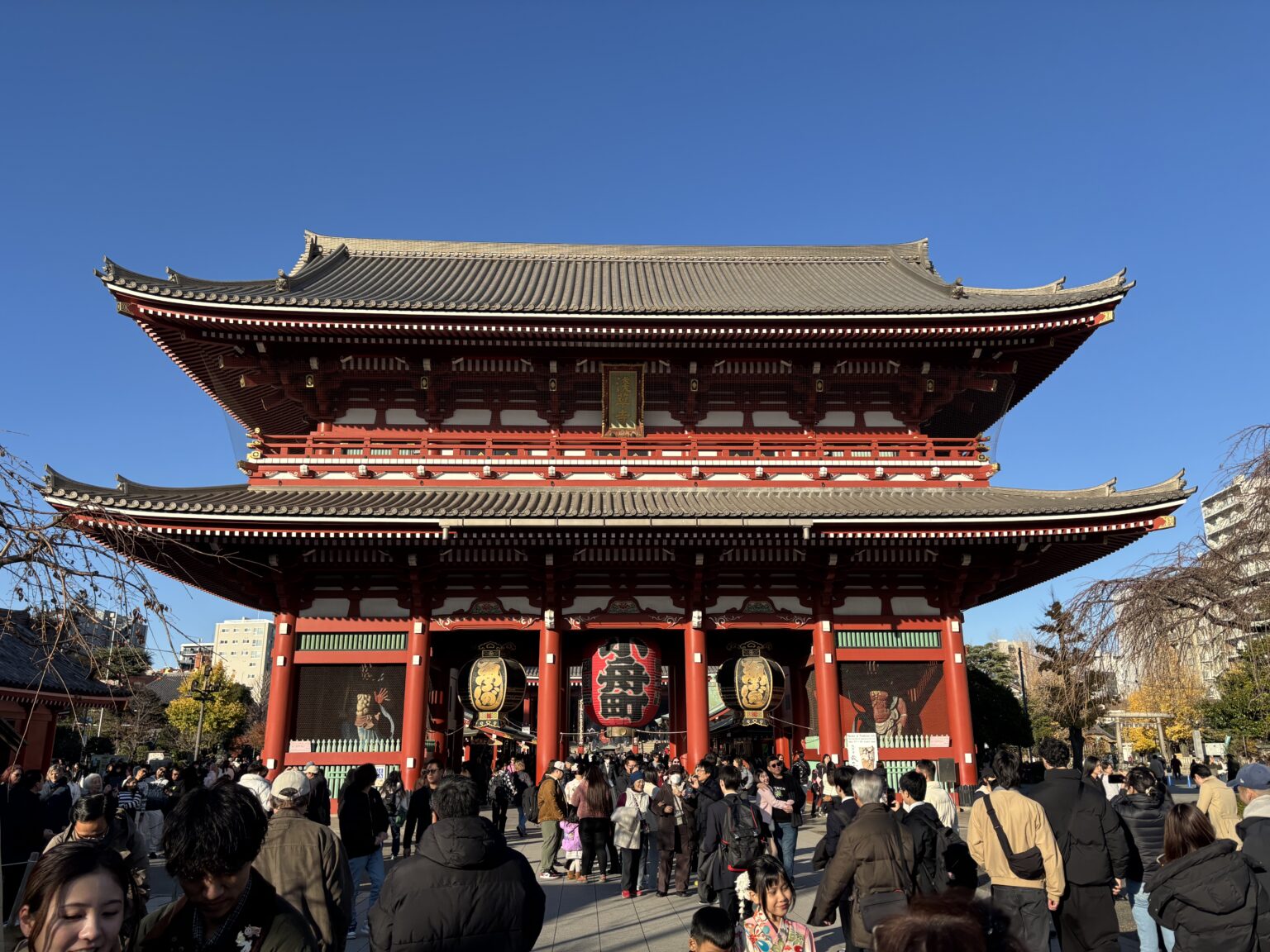
Welcome to Asakusa, Tokyo’s most captivating downtown district where ancient traditions thrive alongside modern landmarks like the Skytree. As a first-time visitor, navigating the solemn grounds of Sensoji Temple and the bustling Nakamise Street can feel overwhelming. This isn’t just a basic sightseeing guide; it’s your essential resource for avoiding common tourist confusion. We’ll cover everything from must-know Japanese manners and local payment methods to the best gourmet spots and secret underground streets. Use these insider tips to fully immerse yourself in the true spirit of Asakusa and ensure your trip is smooth and unforgettable.
Asakusa
Asakusa is a downtown area in Tokyo where Japanese tradition and culture merge. It is famous for the gigantic Kaminarimon (Thunder Gate), the solemn Sensoji Temple where you can feel Japanese culture, and the Skytree, said to be the world’s tallest tower, visible in the distance.
It is one of Japan’s most famous tourist destinations and an “unmissable sightseeing spot in Tokyo” visited by tourists from all over the world. While Asakusa is a place name in the eastern part of Taito Ward in the 23 wards of Tokyo, it is common to tour the surrounding tourist spots as well. In this article, we introduce tourist spots around Asakusa.
💡 Traveler’s Tip: Access&Connectivity
・Getting There: Asakusa Station is served by the Tokyo Metro Ginza Line (G19) and Toei Asakusa Line (A18). It’s a direct ride from Shibuya or Ginza.
- Sensoji Temple (Sensoji)
- 🥗Nearby Vegetarian Restaurants
- 🗣️ A Little Chit-Chat
- ☕️Thank you for your continued support!
Sensoji Temple (Sensoji)
Kaminarimon (Thunder Gate) / Fūraijinmon (Wind and Thunder God Gate)
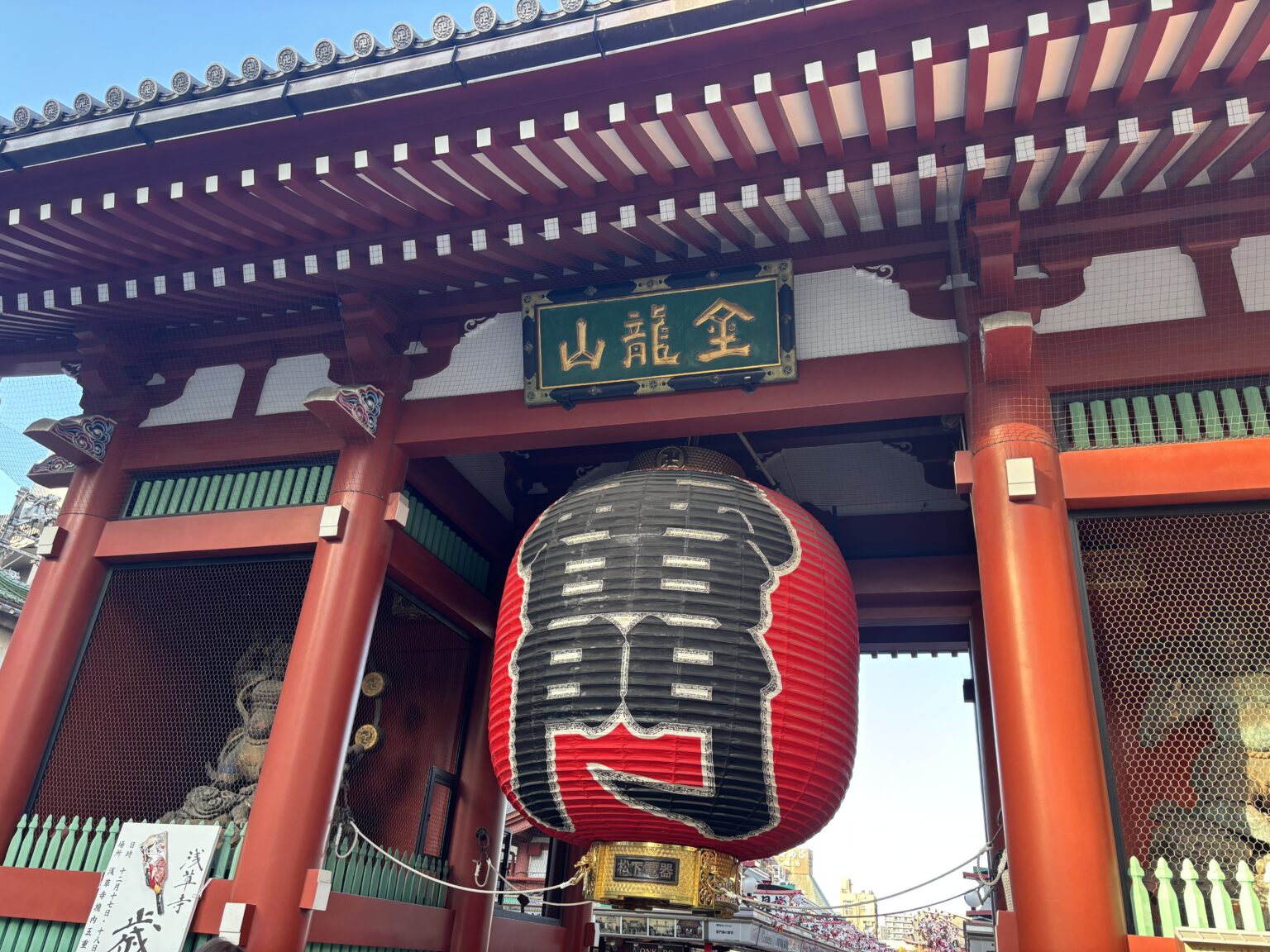
When you hear “Asakusa,” the first thing that comes to mind is probably this “Kaminarimon.” Its official name is “Fūraijinmon,” and it is characterized by the large red chōchin (lantern) at the main gate of Sensoji Temple, inscribed with “Kaminarimon.”
The area in front of Kaminarimon is bustling with tourists from all over, trying to take photos. The famous Ningyo-yaki (doll-shaped cakes) sold on Nakamise Street sometimes come in the shape of Kaminarimon, so it’s a great idea to buy them and take a picture lined up!
💡 Traveler’s Tip: Best Photo Times
To avoid the massive crowds in your photos, try visiting early in the morning (before 9 AM) or at night. The lantern is illuminated until around 11 PM, offering a mystical atmosphere.
Nakamise (Nakamise Shopping Street)
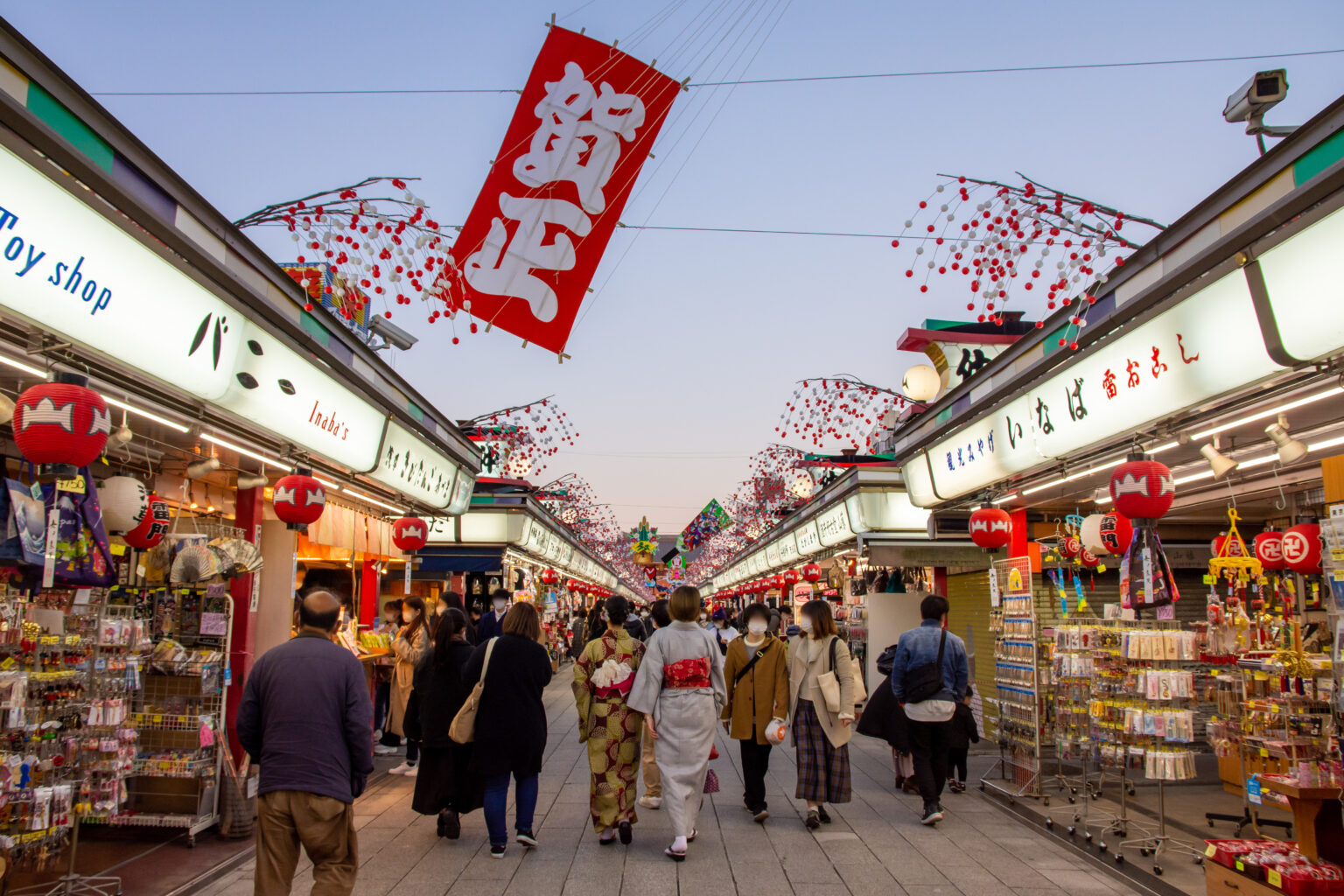
Passing through Kaminarimon, you arrive at the “Nakamise Shopping Street,” one of the oldest shopping streets in Japan. Here, you can enjoy traditional Japanese culture while walking, with items like sensu (folding fans), ningyo-yaki (doll-shaped cakes), matcha (green tea), dango (dumplings), and fried dango.
It is usually very crowded, so if you want to pass through quickly, it’s better to take the side streets next to it. Trying to rush through Nakamise can be dangerous due to collisions. Also, while you can buy food and drinks at the stores in Nakamise, you are not allowed to eat or drink while walking through Nakamise. Walk a little until you exit the street, and then step off the Nakamise to eat or drink before returning.
My personal recommendation is Ningyo-yaki. It’s a sponge cake with anko (sweet bean paste) inside, but I always feel like I have to eat this when I come to Nakamise!
💡 Traveler’s Tip: Manners
No “Tabearuki” (Walking while eating): In this specific crowded area, it is bad manners to walk while eating. Please stand to the side or use designated eat-in spaces provided by shops to enjoy your snacks.
Jokoro (Incense Burner)
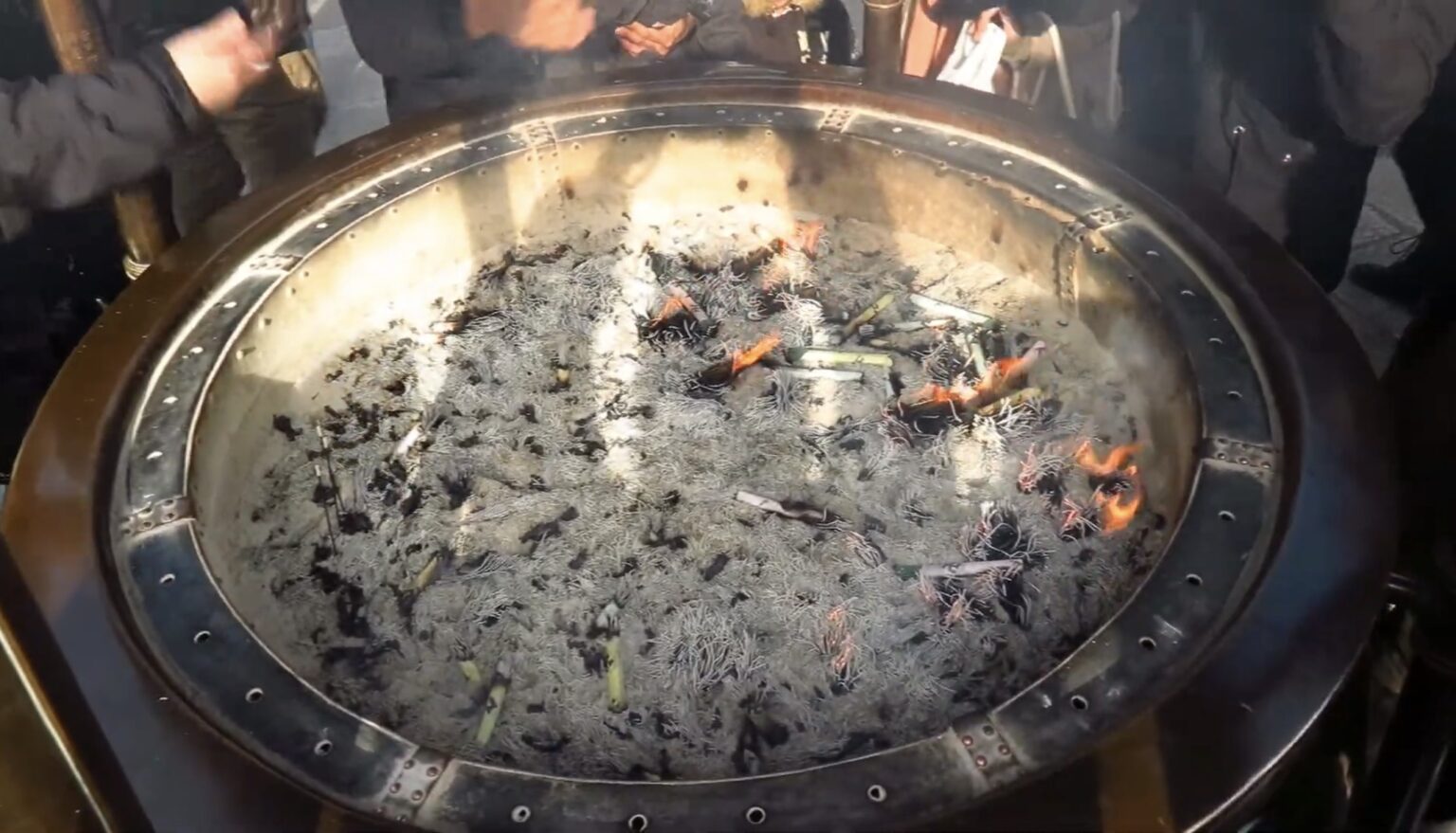
fter passing through Nakamise, you arrive in front of the main hall of Sensoji Temple. You’ll see people bathing in the smoke there—what are they doing?
This is called the Jokoro (incense burner). The smoke from the Jokoro is traditionally believed to cleanse the body of impurities and speed up the healing of bad areas of the body when bathed in the smoke.
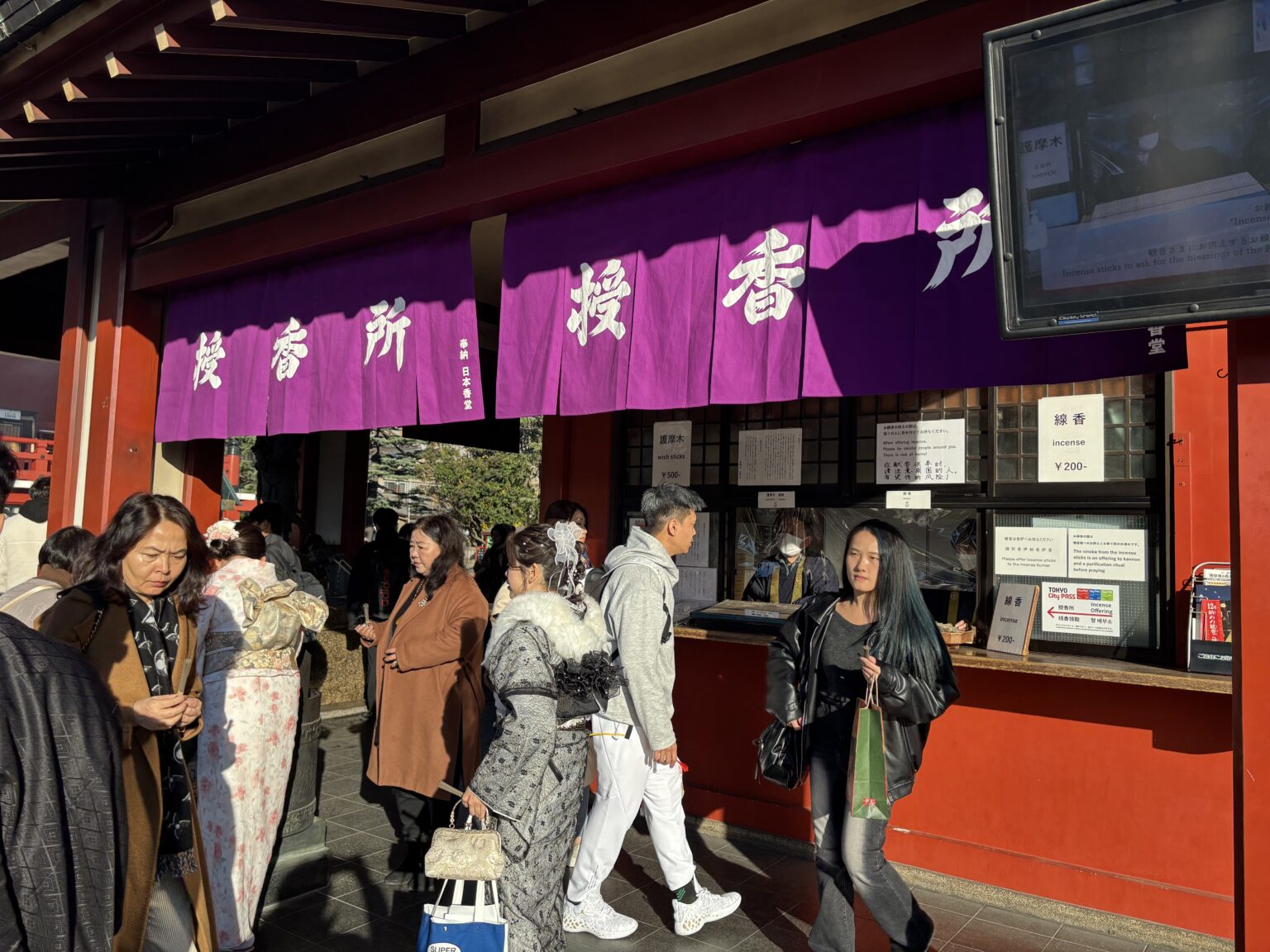
You can purchase incense sticks at the Jukosho (incense offering place) near the Jokoro.
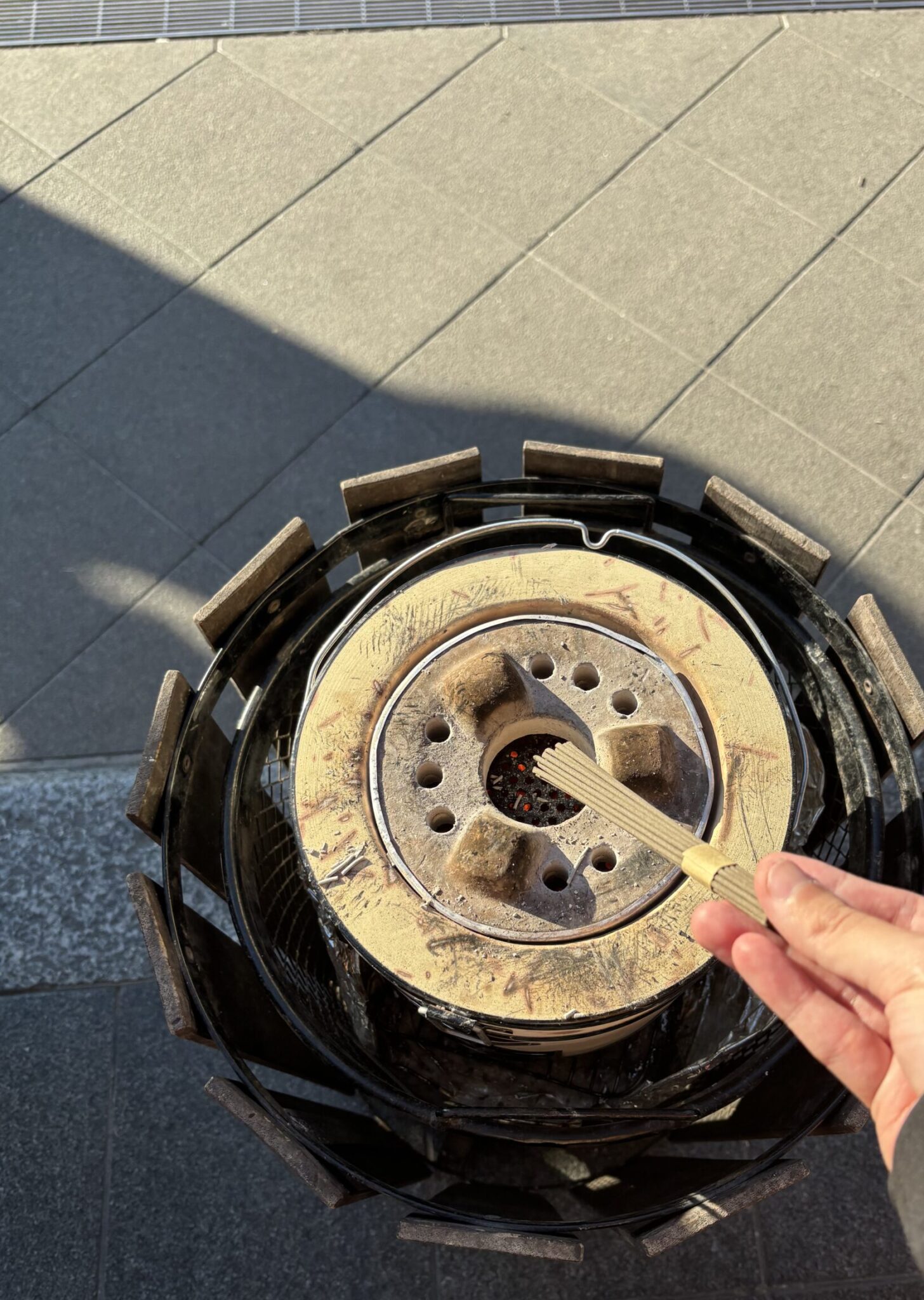
The purchased incense can be lit nearby.
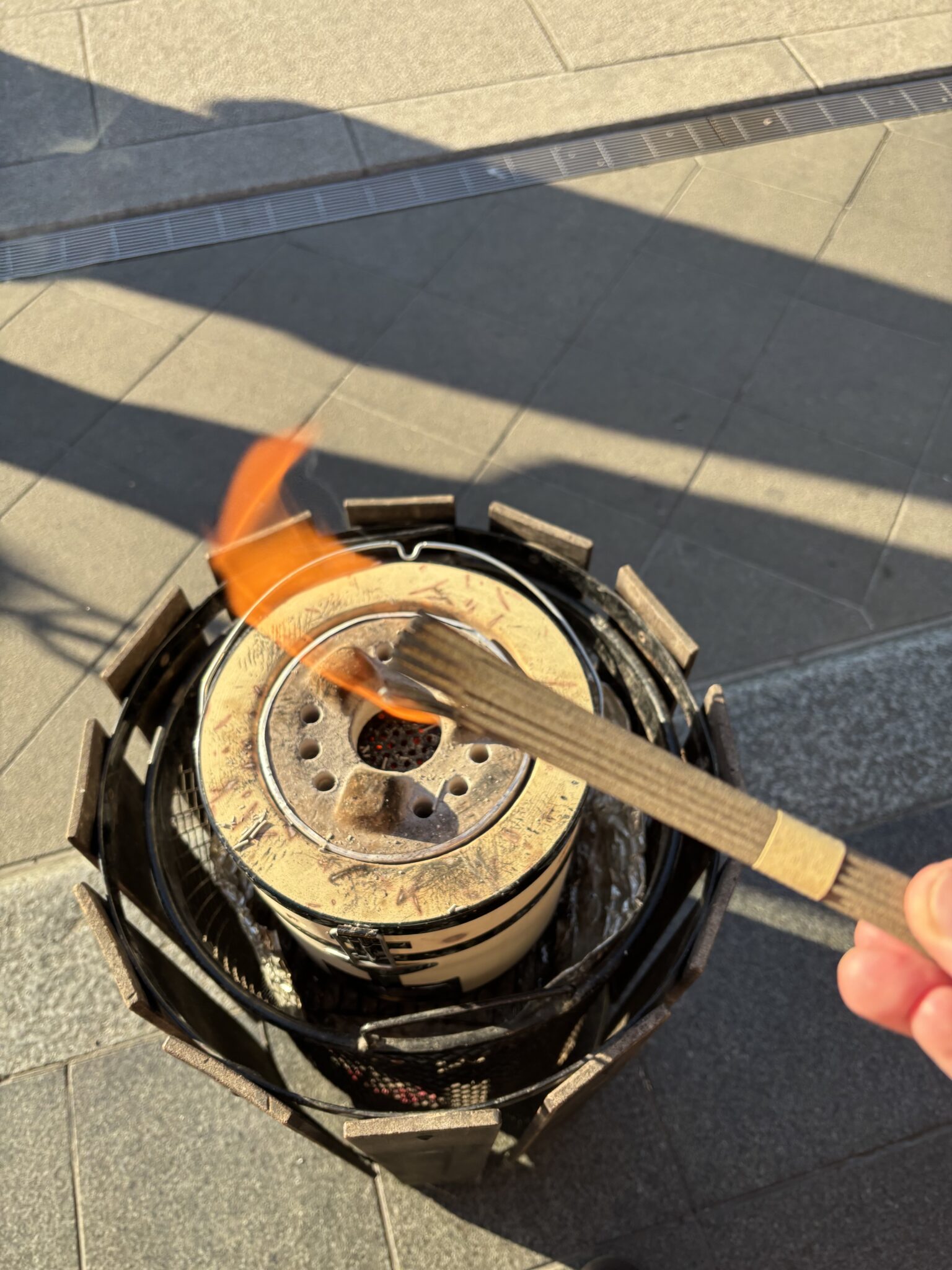
When lighting the incense, the custom is to extinguish the flame by shaking the stick or fanning it with your hand, not by blowing on it. Blowing on the fire in front of the sacred altar is considered impolite.
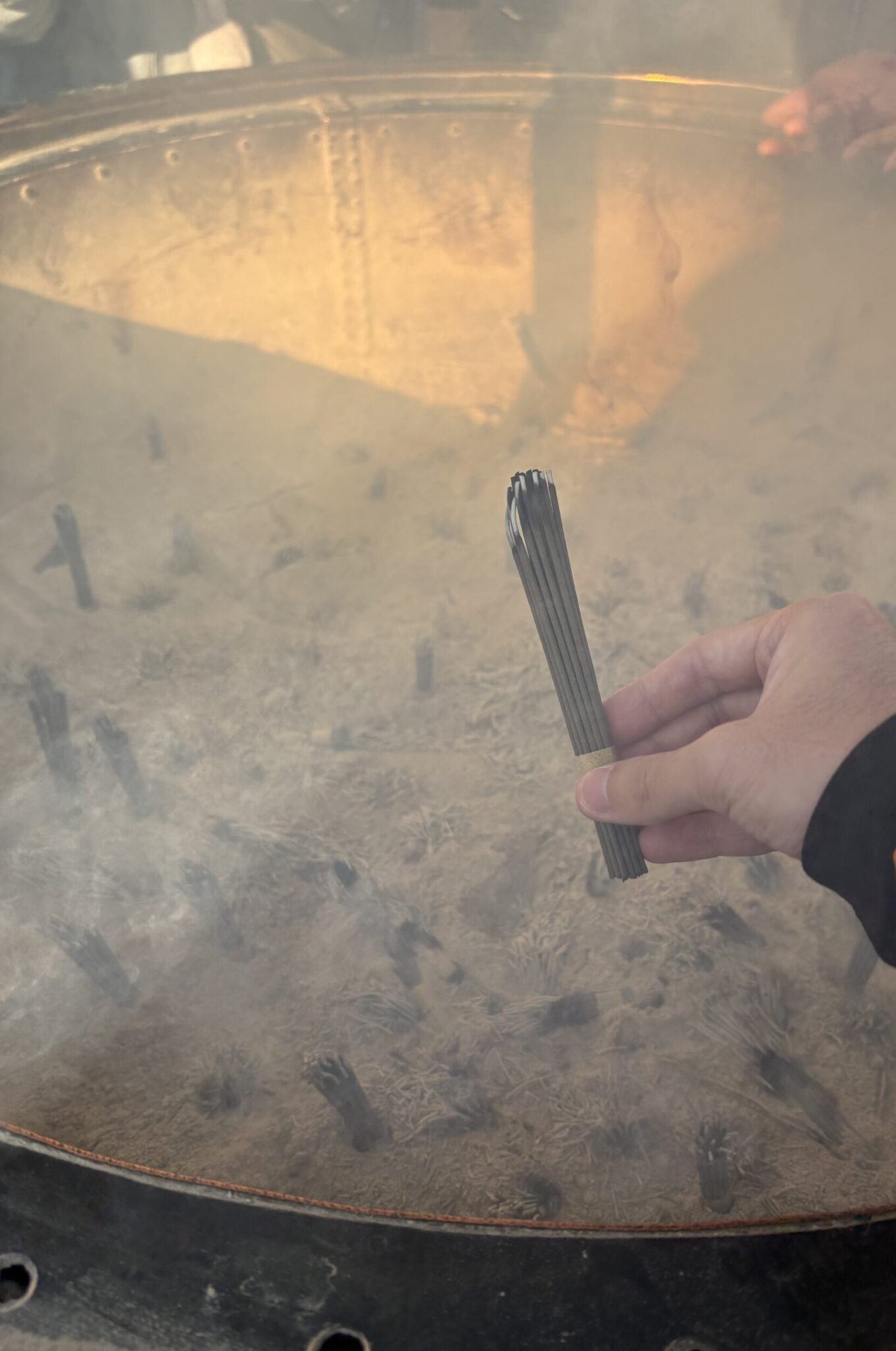
Once the fire turns to smoke, place the incense stick in the Jokoro.
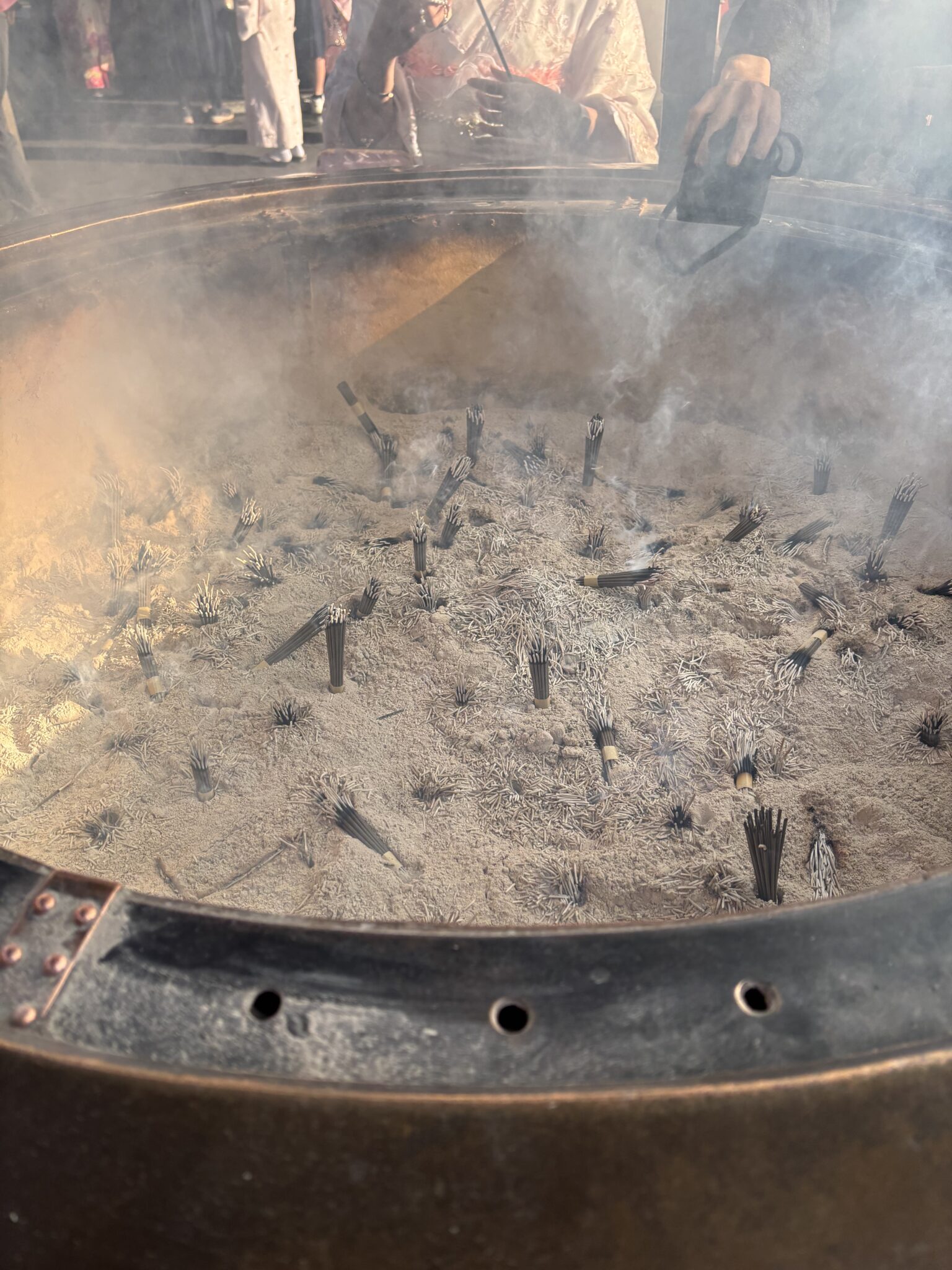
Sensoji Temple Grounds
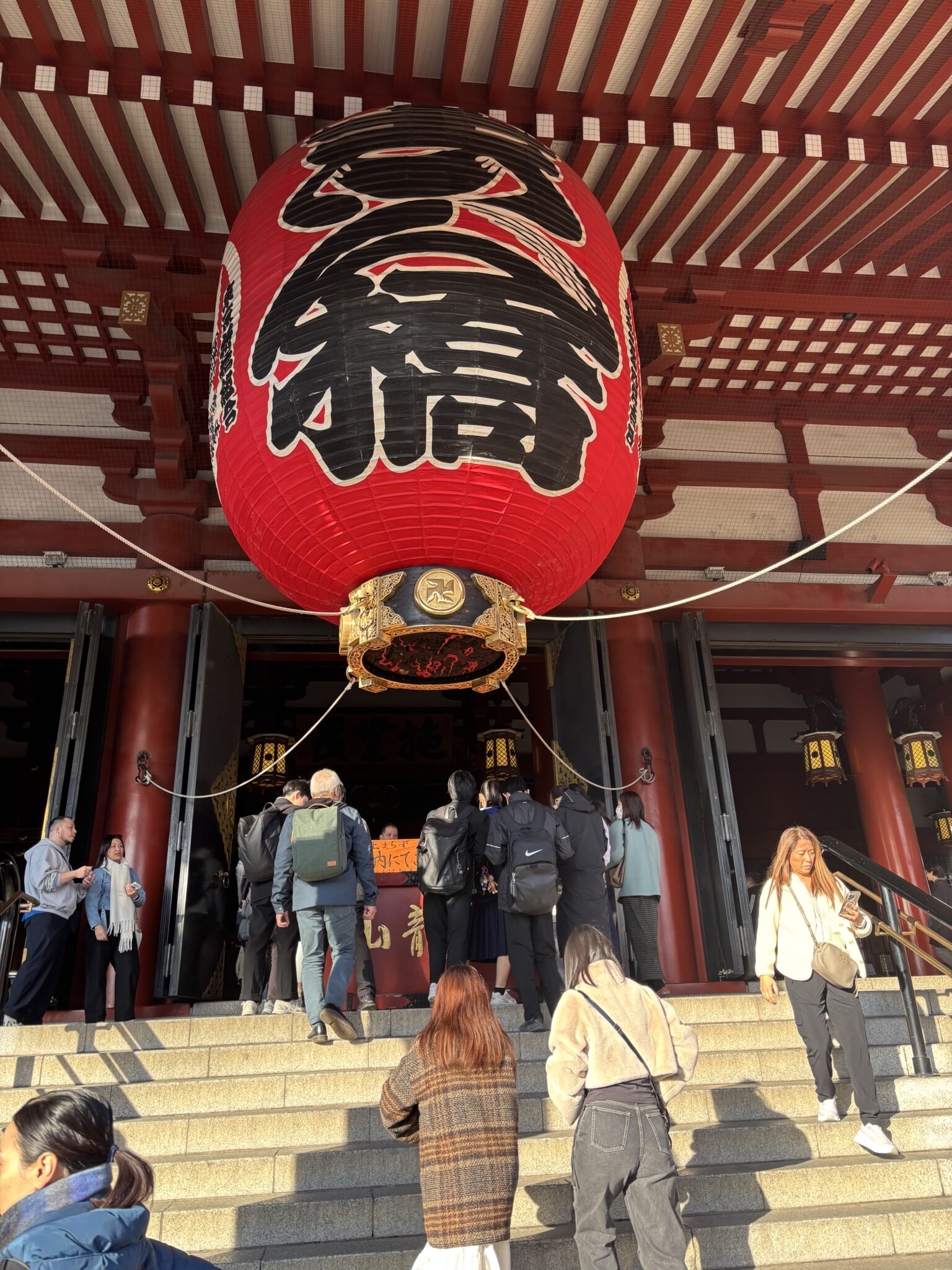
This is the Main Hall, the heart of Sensoji Temple. The Main Hall enshrines the principal image, the Sei Kannon Bosatsu (Holy Kannon). It is widely revered for its power to grant all wishes (“Shogan Joju”), including prosperity in business, family safety, warding off evil, and healing illnesses.
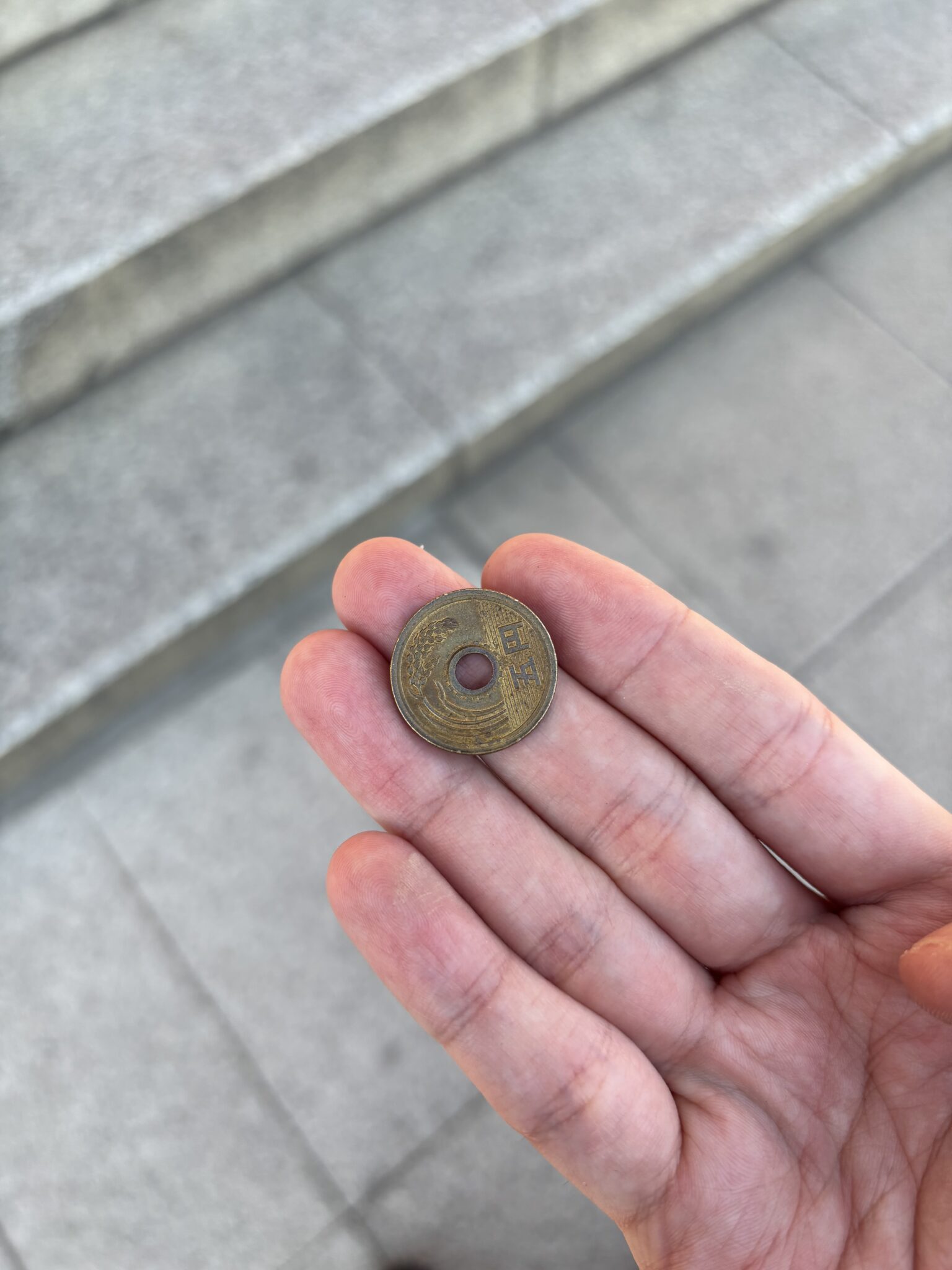
(💡A note for overseas visitors): In Japan, it is common to offer a 5-yen coin as an offering (osaisen) when visiting temples and shrines. While there is no set amount, this is because Go-en (5 yen) has the same pronunciation as Go-en (good fortune or relationship), symbolizing a wish for “good relationships.” This type of meaning attached to the sound of a word is called goroawase (a wordplay) and is part of Japanese culture.
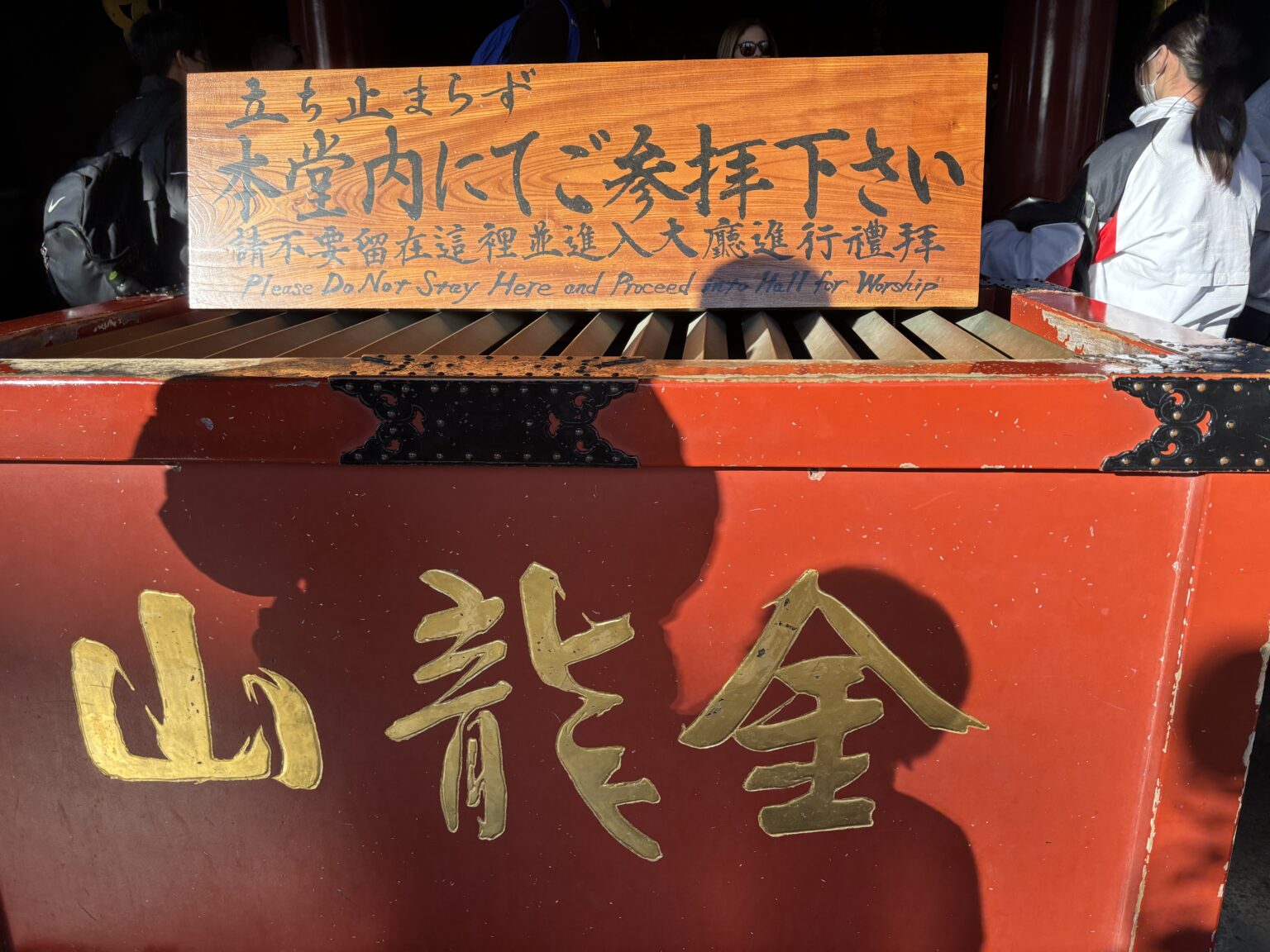
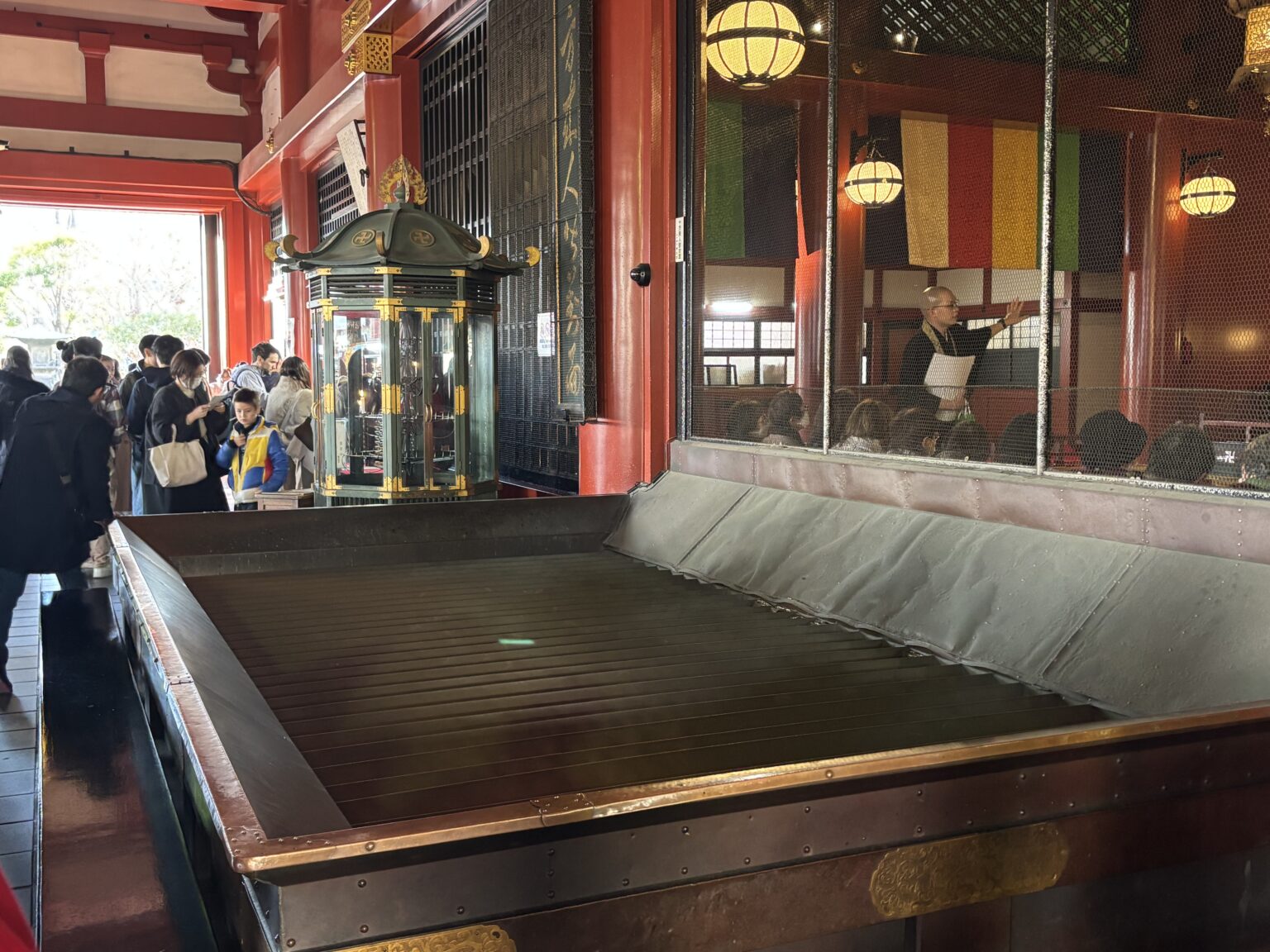
There are two offering boxes, and it is fine to use either one, but we recommend going to the larger offering box further back, as you can pray closer to Kannon.
💡 Traveler’s Tip: How to Pray at a Temple
1,Bow slightly.
2,Gently toss your coin into the box.
3,Put your hands together in prayer (Do not clap at temples; clapping is for shrines).
4,Bow again before leaving.
Omikuji (Fortunes)
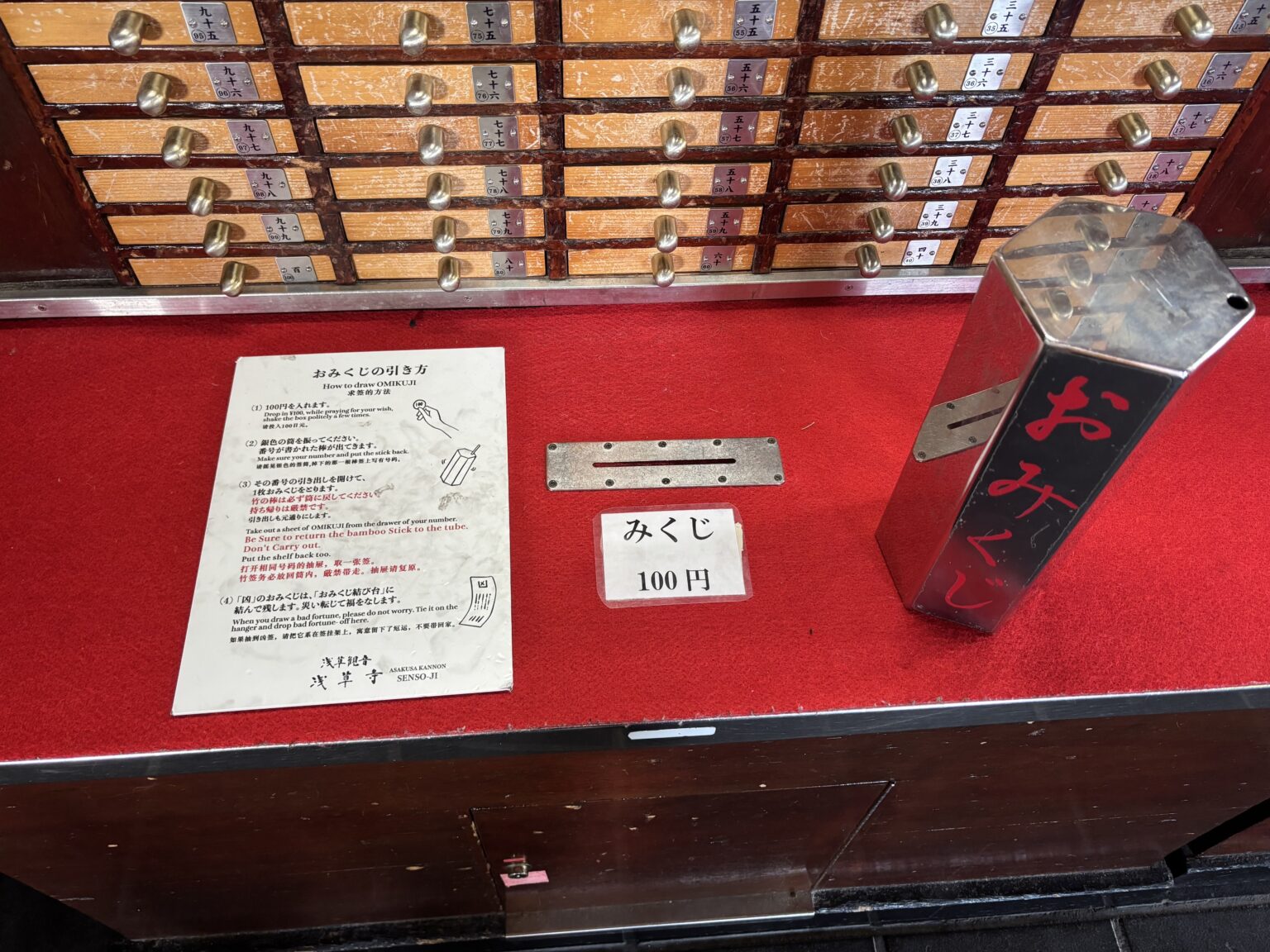
The Omikuji (written fortunes) are indispensable when visiting a shrine or temple.
Omikuji (What is it?)
Omikuji is a written fortune slip obtained at a Japanese shrine or temple. It is used to divine your general luck for the near future, covering areas such as health, business, travel, and romance. By drawing an Omikuji, you can receive a message from the deity or Buddha.
At Sensoji Temple, you shake a metal cylinder and open the drawer corresponding to the number that falls out.
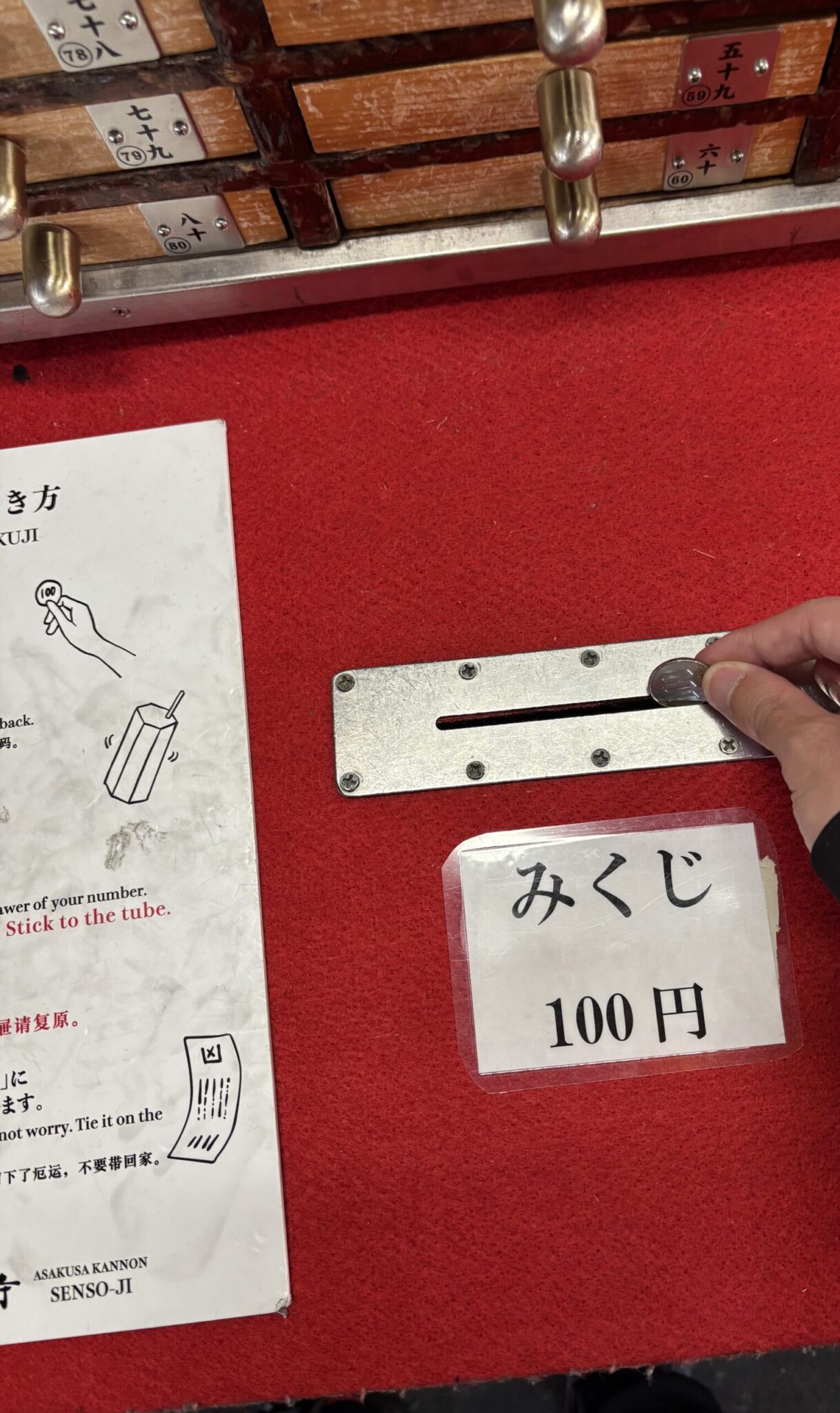
An omikuji costs 100 yen.
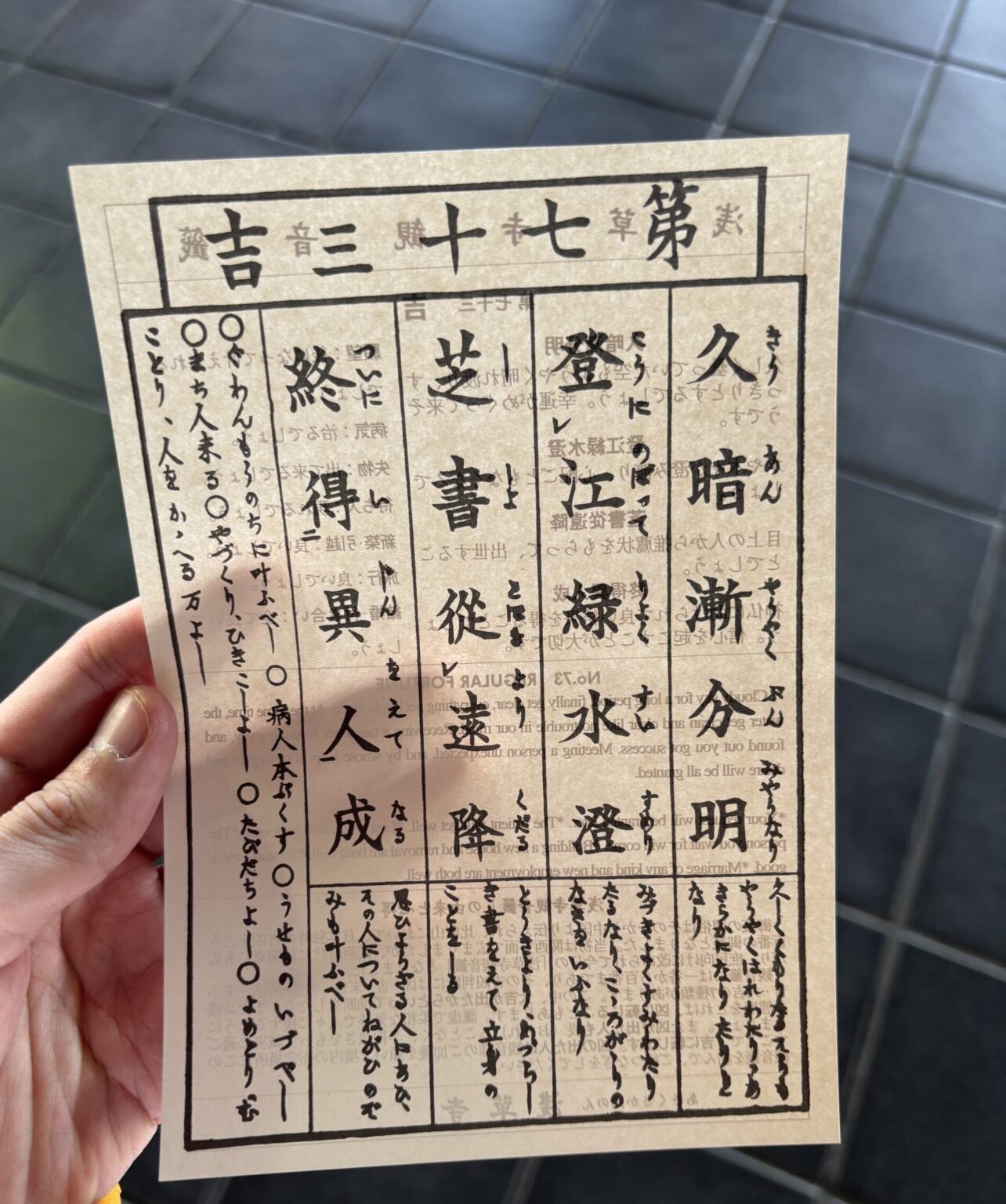
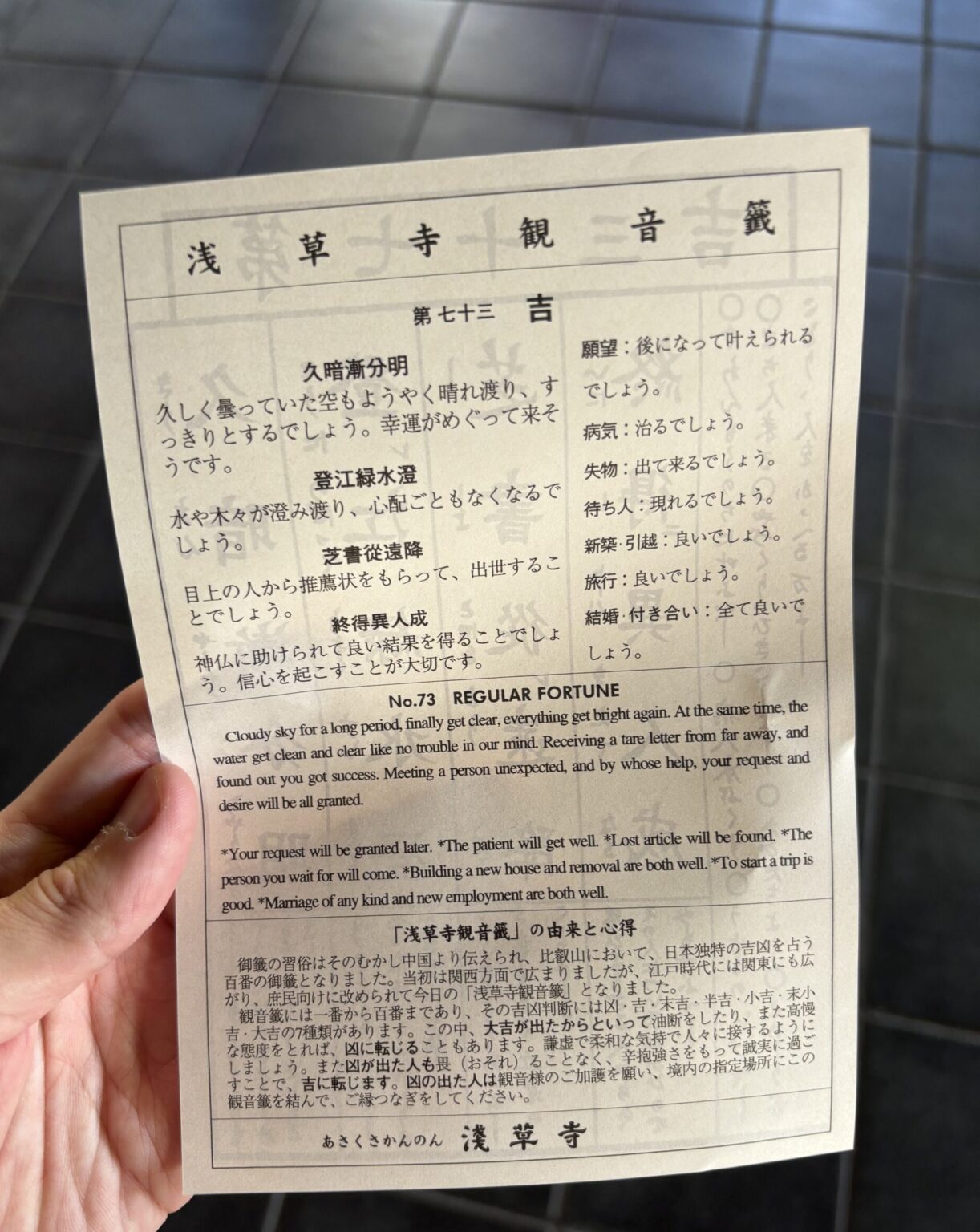
The result I got was Kichi (Good Fortune)! It is said that Sensoji Temple has many Kyo (凶 Bad Fortunes), with about 30% of the total being Kyo. The order of fortunes varies by temple or shrine, but at Sensoji Temple, the order of best to worst is generally: 大吉 Daikichi (Great Good Fortune), 吉 Kichi (Good Fortune), 半吉 Hankichi (Half Good Fortune), 小吉 Shokichi (Small Good Fortune), 末小吉 Sue-Shokichi (Future Small Good Fortune), すSuekichi (Future Good Fortune), and Kyo (Bad Fortune). In my case, Kichi means I got the second-best luck!
💡 Traveler’s Tip: English Support
English Translations: The Omikuji slips at Sensoji have English explanations on the back.
If you get “Bad Fortune”: Don’t worry! Tie it to the designated rack to leave the bad luck behind.
If you get “Good Fortune”: Keep it with you as a lucky charm.
Kimono Rental
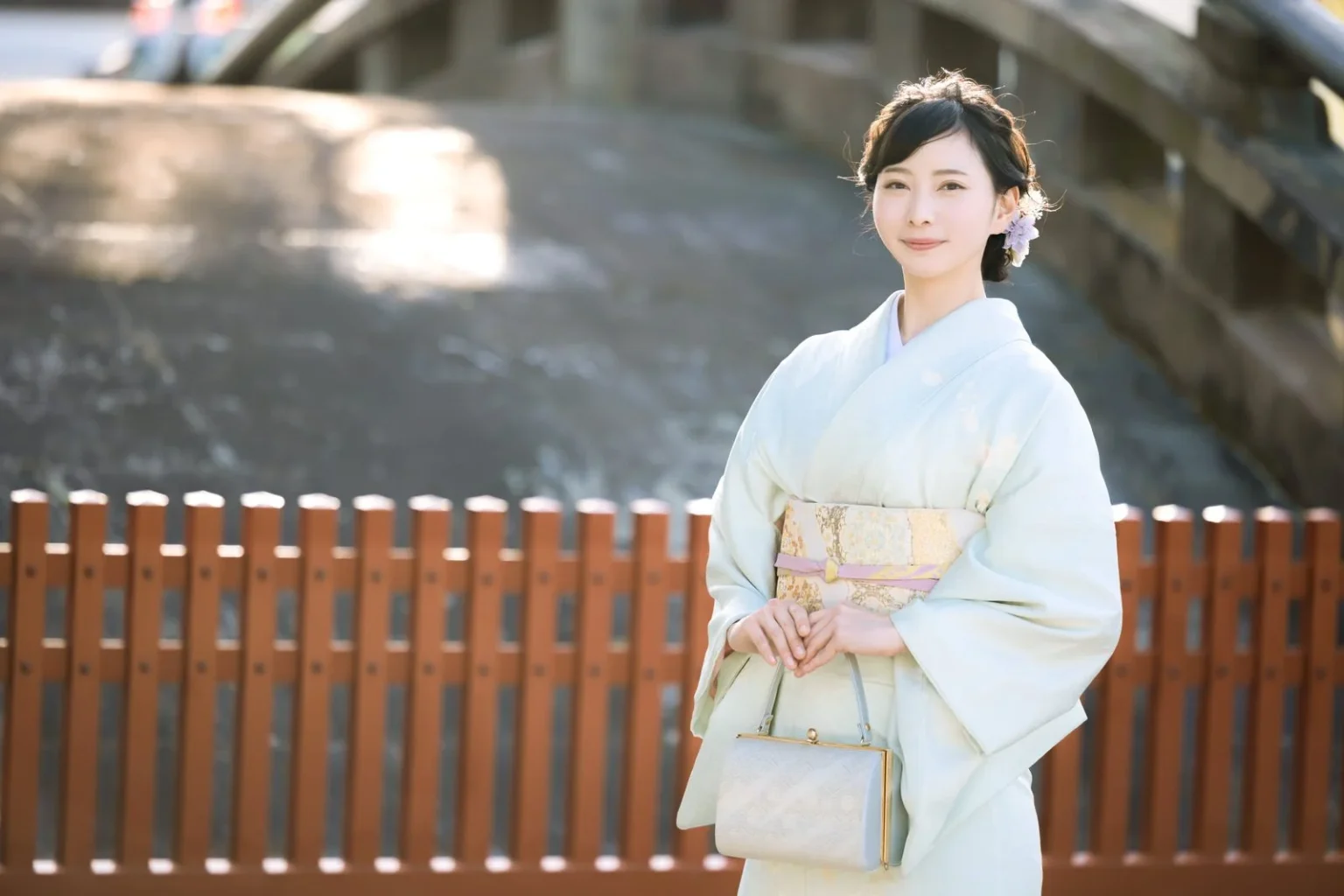
Why not immerse yourself in the traditional Japanese culture of Asakusa?
You can rent a kimono in Asakusa. Here are a few of the many kimono rental shops near Sensoji Temple.
VASARA
This is a popular kimono rental shop among overseas travelers. They have staff who can speak English, and you can request professional dressing and hair setting, making it recommended for kimono beginners. Since it is located near tourist spots, it is convenient to incorporate into your sightseeing plan.
They offer a wide range of kimonos for various age groups, from cute to elegant styles. Advance reservations are possible, which makes the process smoother before sightseeing.
Waraku
Next is “Waraku.” This shop also has staff who can speak English, making it a safe choice for overseas travelers. They use high-quality accessories such as zori (sandals) and bags, making it recommended for those who want an authentic Japanese cultural experience.
They have many high-end kimonos that can be used for a wide range of scenes, including formal occasions.
Rika Kimono
Kyoto Kimono Rental Rika Kimono
Finally, we introduce “Rika Kimono.” This rental shop specializes in sophisticated designs. It is popular among young women and carries many colorful and photogenic kimono designs.
You can also request hair and makeup, allowing you to experience a seasonal and camera-ready kimono style.
💡 Traveler’s Tip: Kimono Advice
- Summer: Ask for “Yukata” (light cotton kimono) in July/August to stay cool.
- Winter: Wear thermal underwear (like Heattech) with a wide neckline underneath.
- Footwear: Geta sandals can be tiring; bring band-aids just in case!
Rickshaw (Jinrikisha)
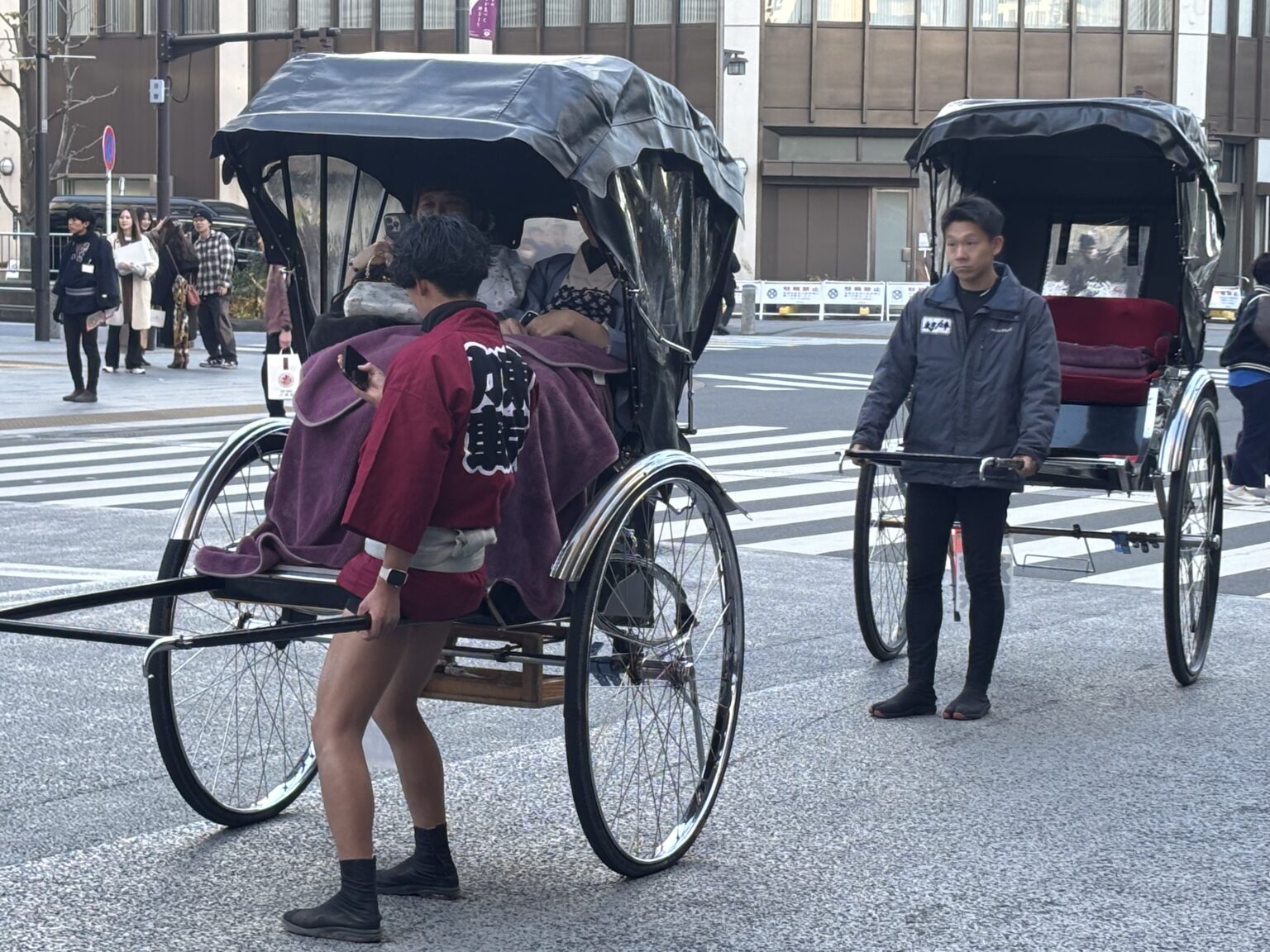
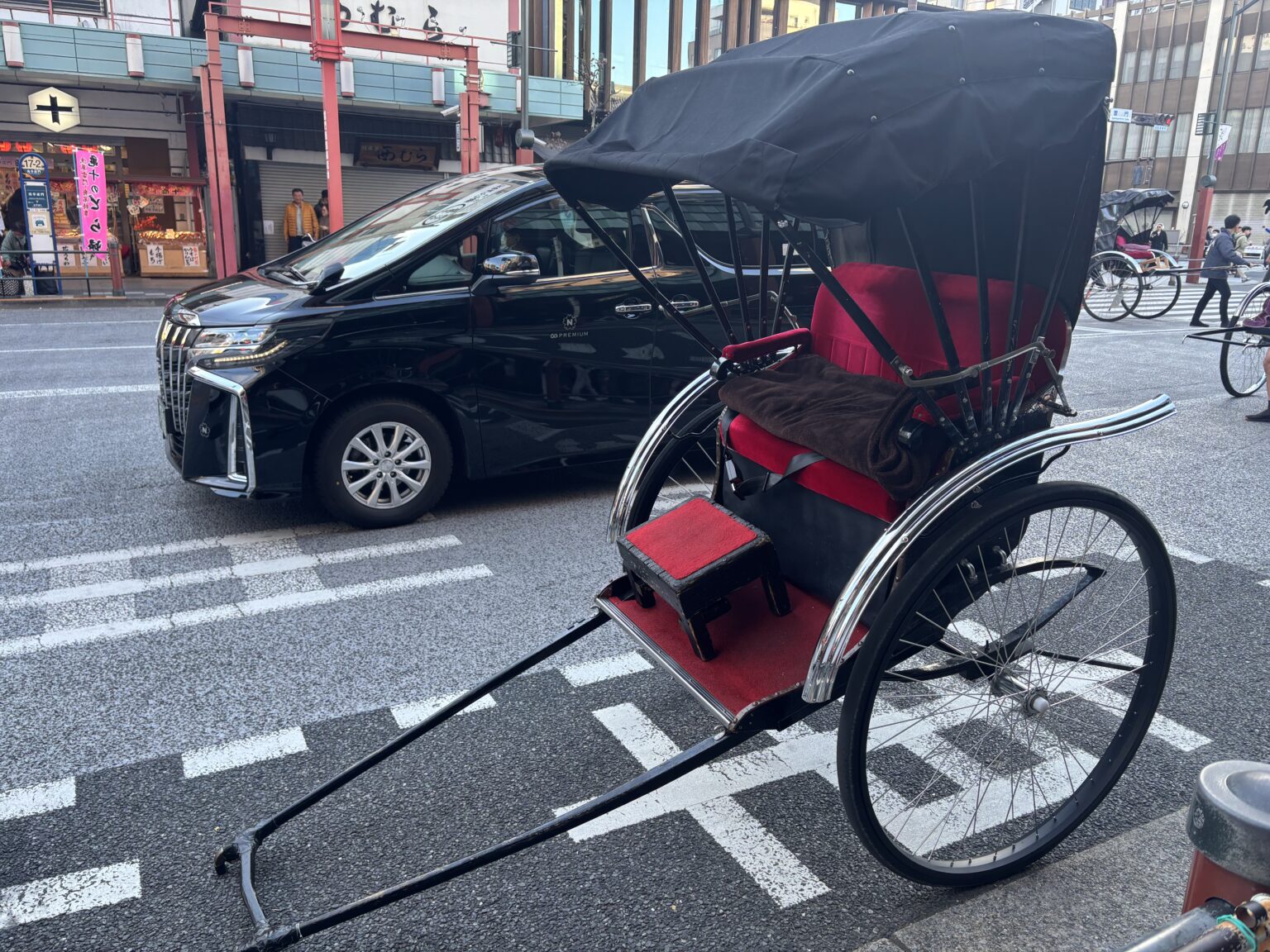
The Rickshaws you see at major Japanese tourist activitie.
You might be surprised when they suddenly call out to you on the street. Their appearance certainly makes you feel like you’ve arrived at a tourist destination, but their true charm is actually in their conversation, not just their look.
They pull the rickshaw while talking about the history and recommended information of the tourist spot to visitors from Japan and abroad every day. They are a treasure trove of hidden tourist information.
They are extremely knowledgeable about local-only tourist information not listed in guidebooks, delicious restaurants, good viewpoints for landmarks, and secret history.
If you want to know unknown tourist information, ride their rickshaw! If you tell them what you want to know beforehand, you will surely encounter the Asakusa you were looking for!
💡 Traveler’s Tip: Rickshaw System
Prices are generally fixed (e.g., by 30 mins, 60 mins), so no haggling is needed. The pullers are also expert photographers and will take amazing photos of you with the best backgrounds.
Nearby Cuisine
Tempura
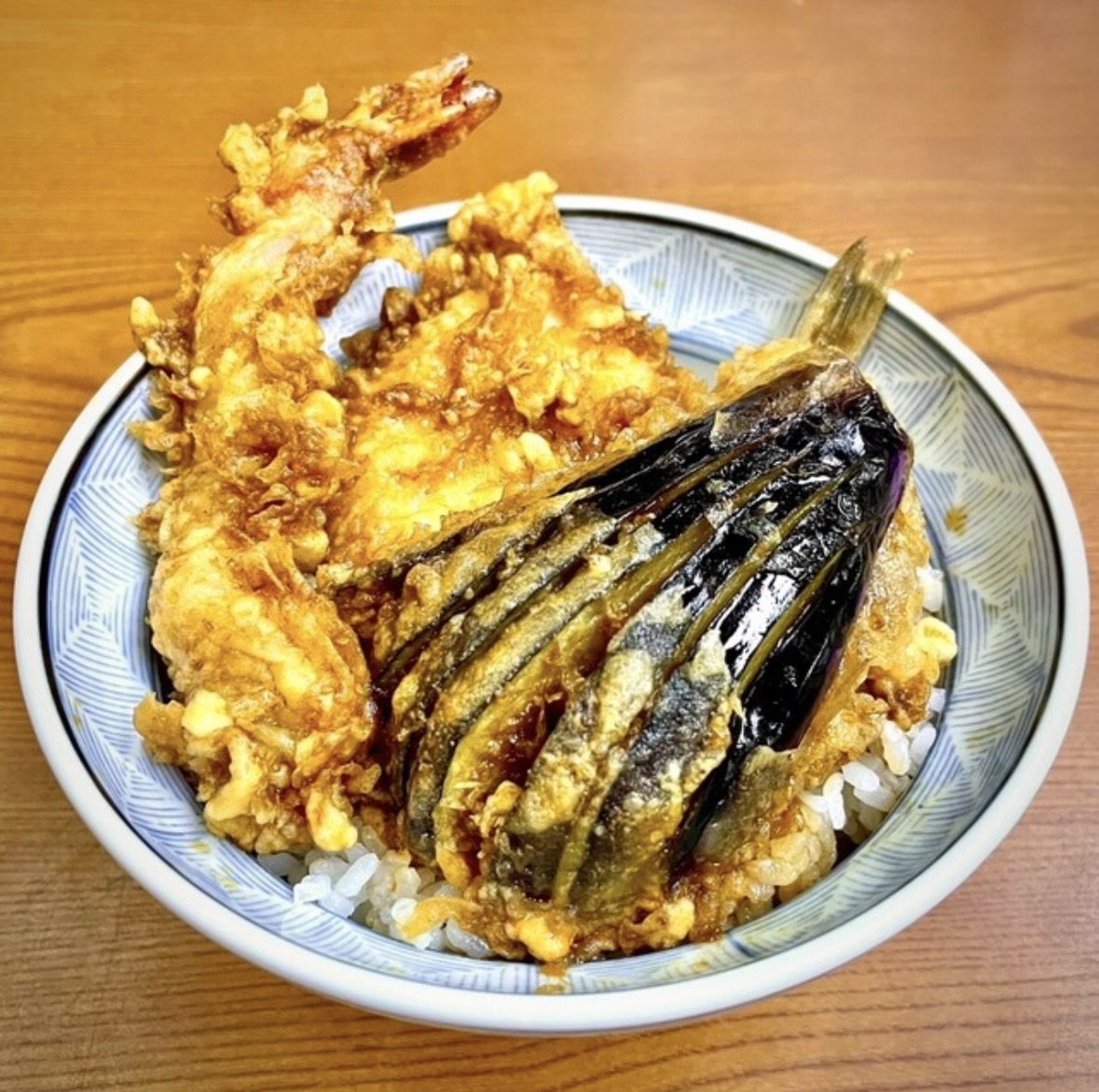
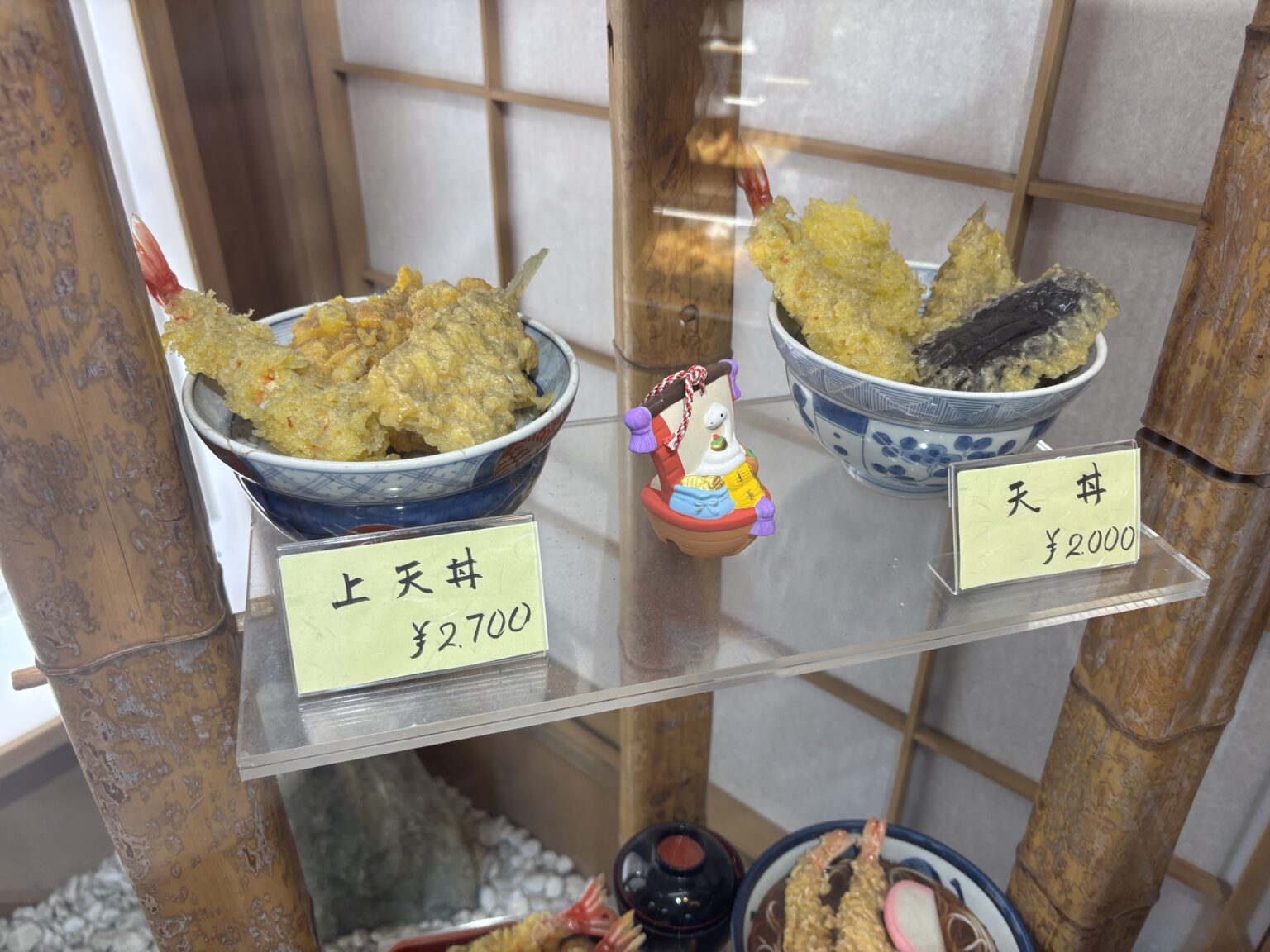
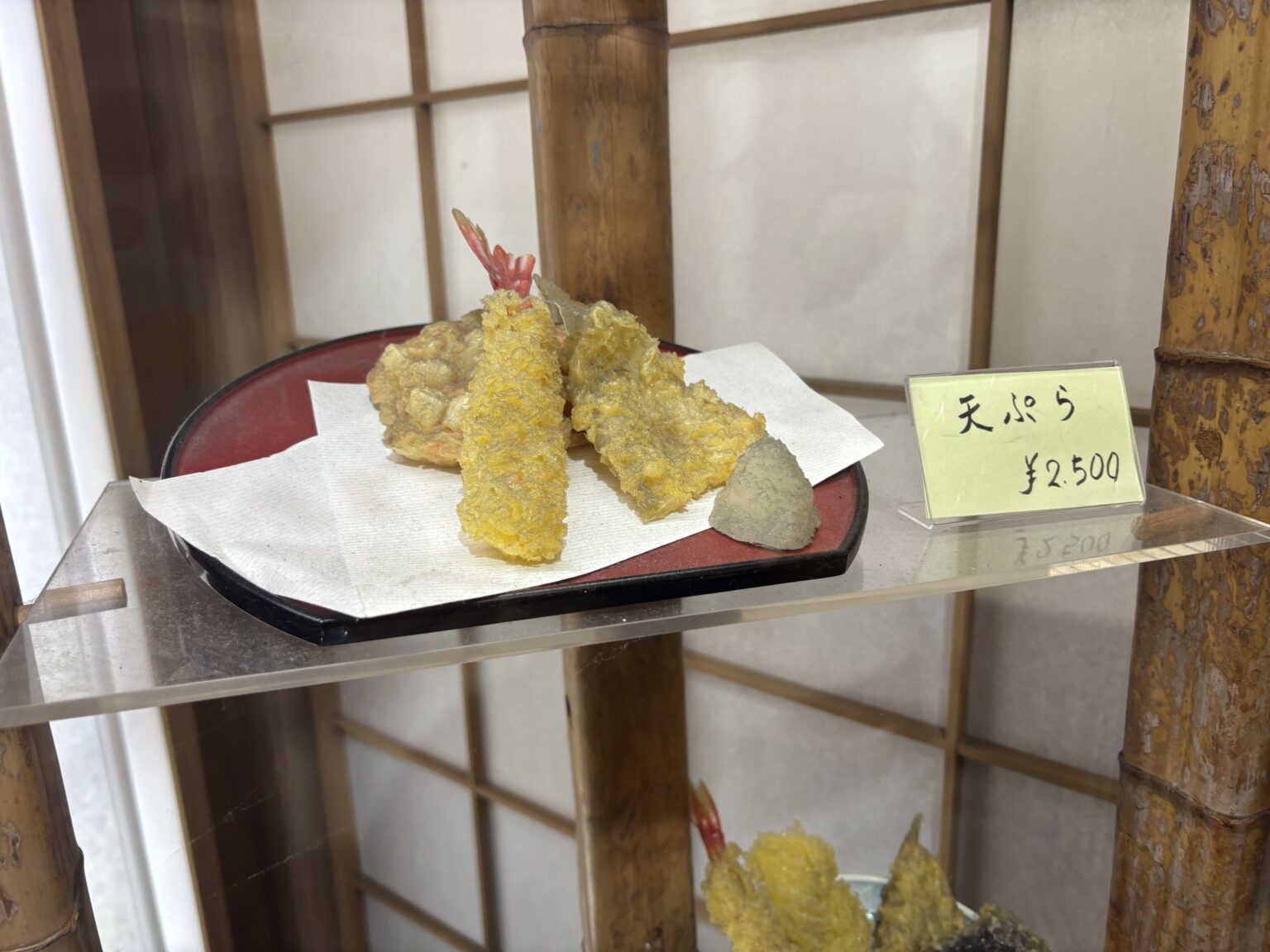
Asakusa has various famous foods, but my top recommendation is Tempura. Here are some famous restaurants where you can enjoy delicious Tempura.
・Sansada
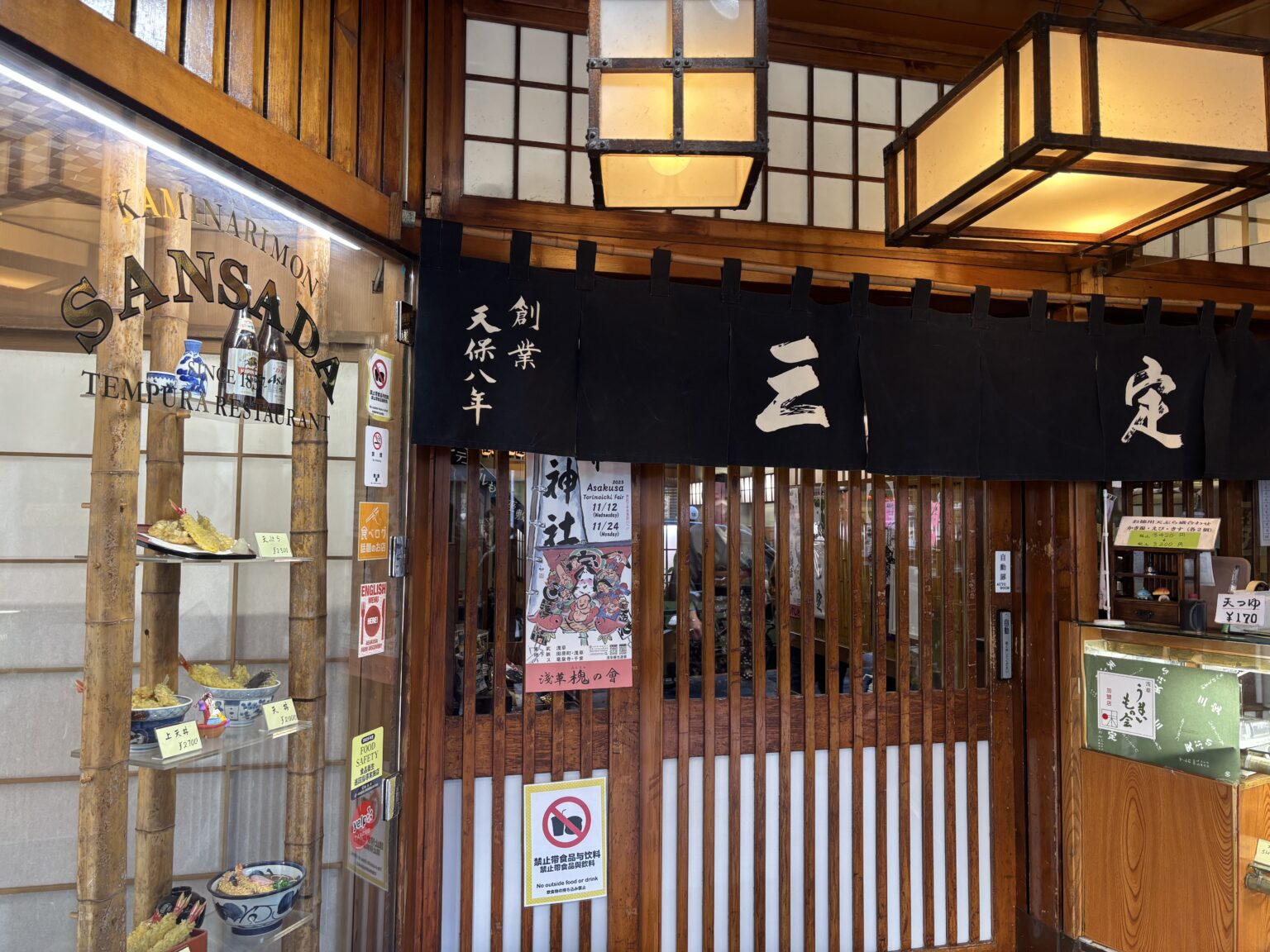
It is an establishment with over 180 years of history and offers the traditional taste passed down from the Edo period to the present day.
It has a store near Kaminarimon, and I think it’s the most delicious place to eat Tempura around Asakusa station.
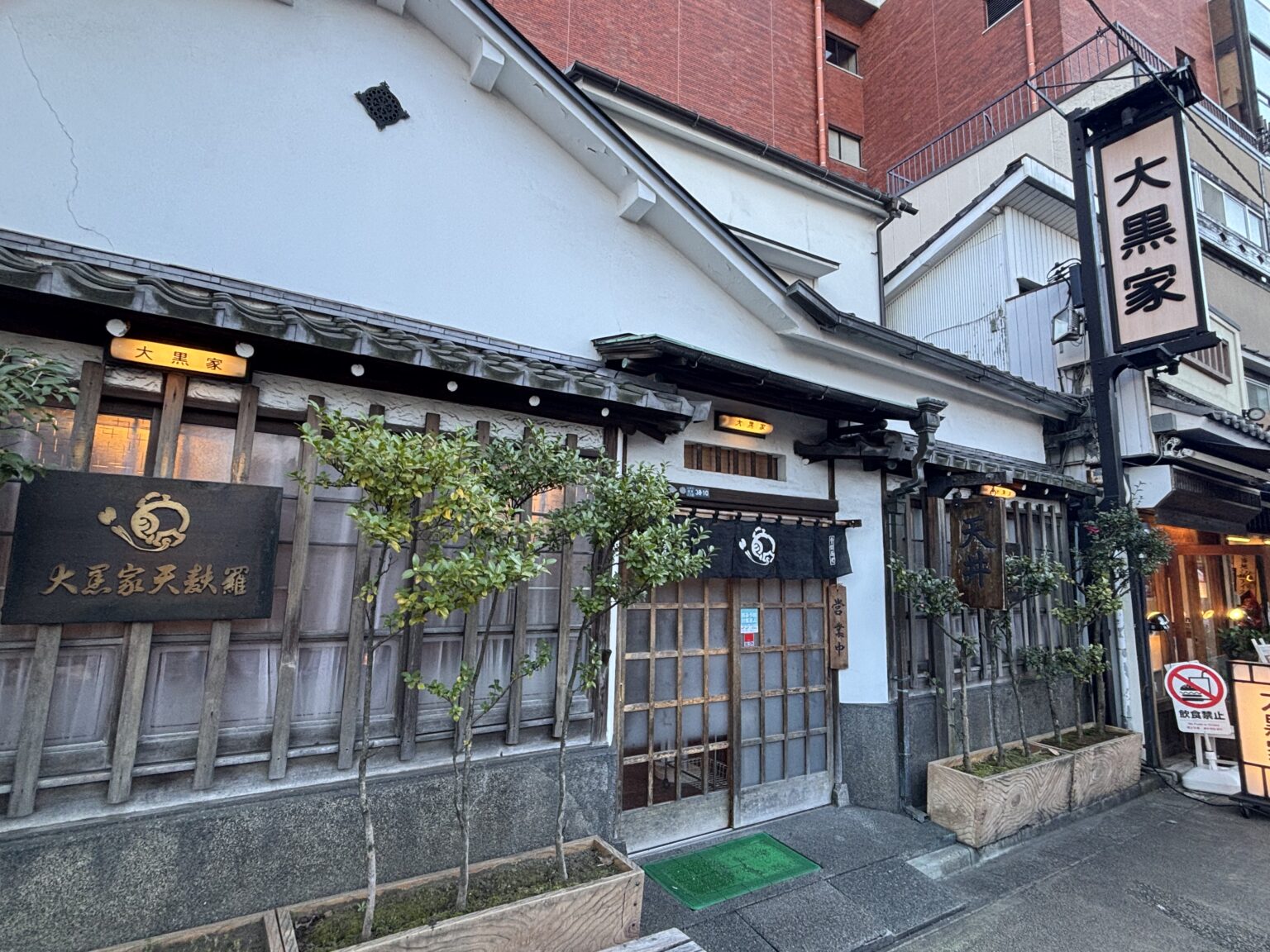
・Daikokuya
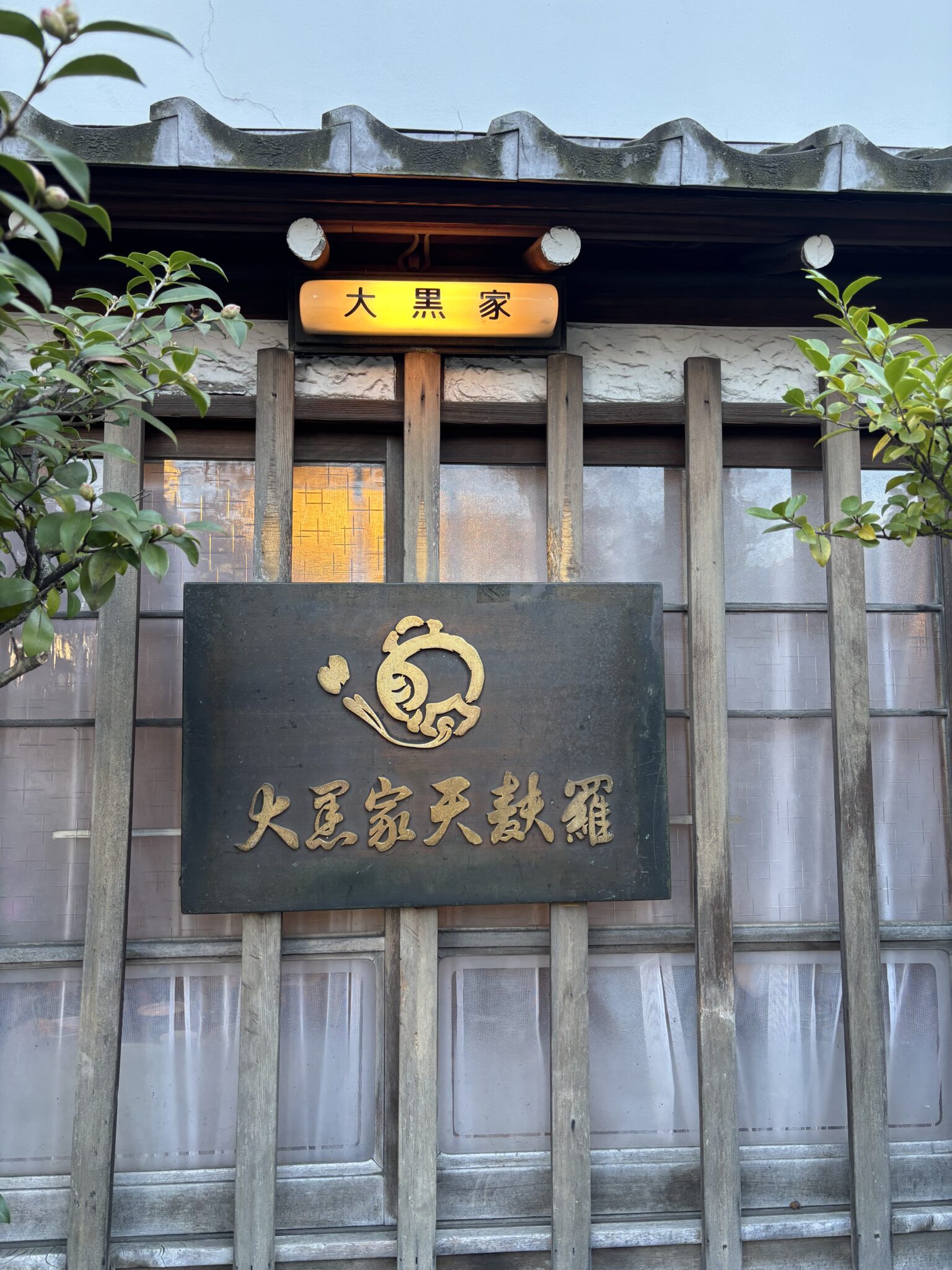
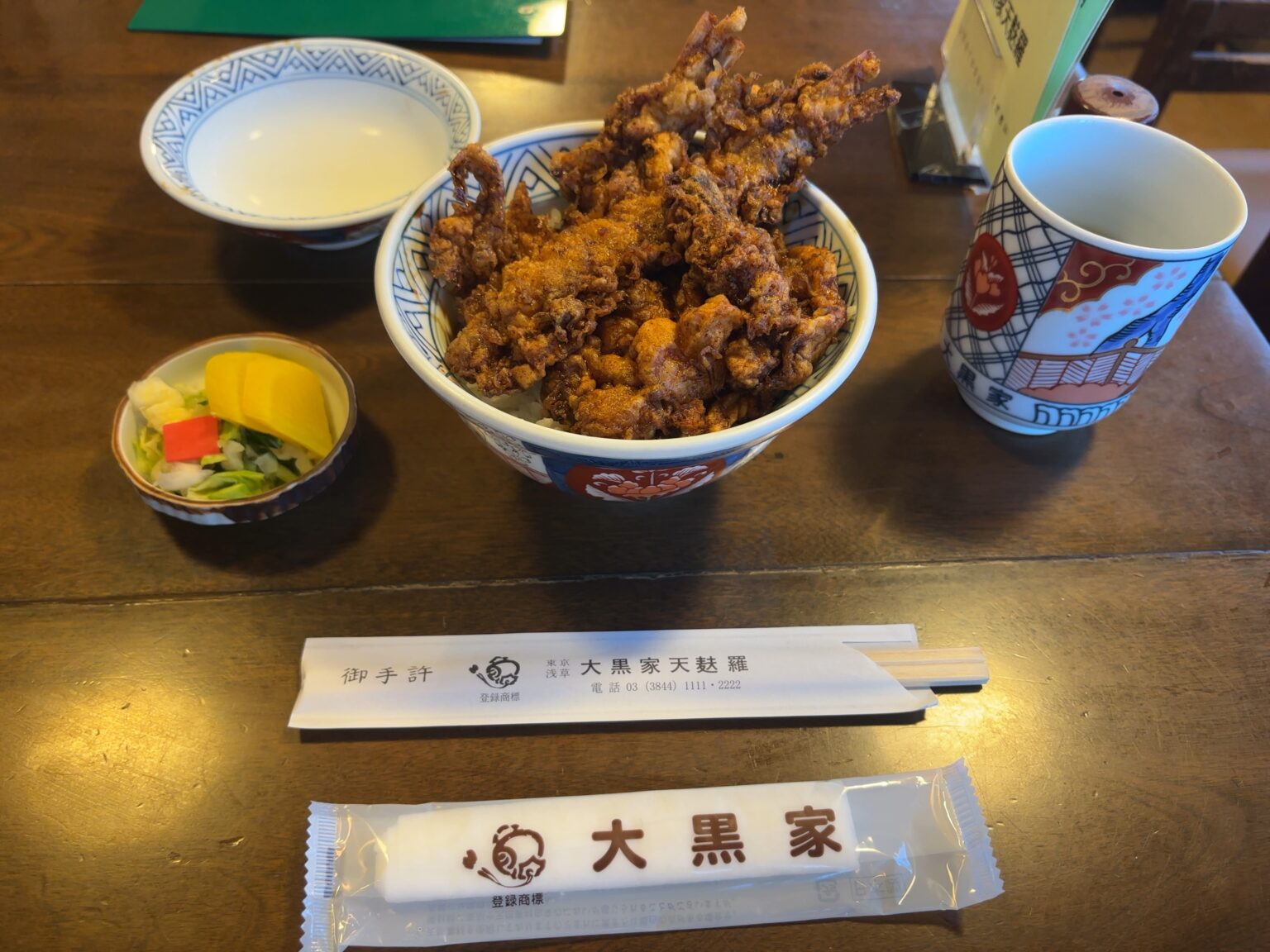
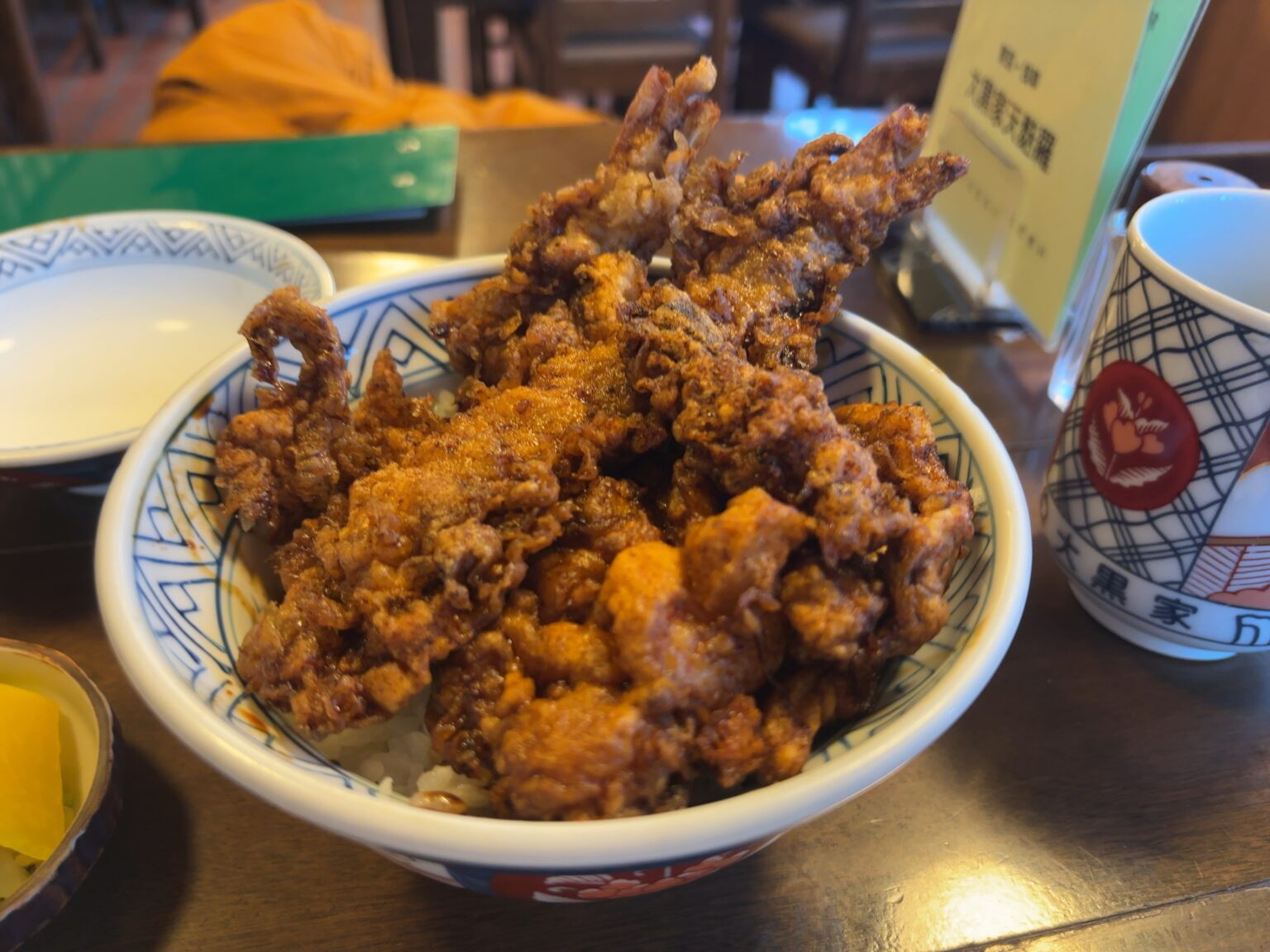
Daikokuya is also a long-established Tempura restaurant founded in 1887, and its thick, dark sauce (passed down from the Edo period) goes well with beer.
It has a store near Sensoji Temple, and I think it is the most delicious Tempura restaurant near the temple.
🍤 My Personal Impression (Review)
The tempura at this restaurant has a richer flavor than typical tempura. Also, the batter isn’t crispy and freshly fried; rather, it has a softer texture, almost as if it’s been lightly dipped in a sauce (or is dressed in a savory sauce).
I believe this is a style of tempura that might divide opinions, but since it is a traditional flavor that has continued since the Edo period, I think it’s worthwhile to experience this Edomae (Tokyo-style) tempura at least once when you visit Asakusa.
After trying the tempura here, you will definitely be able to notice the difference when you eat tempura at another restaurant.
Asakusa Menchi
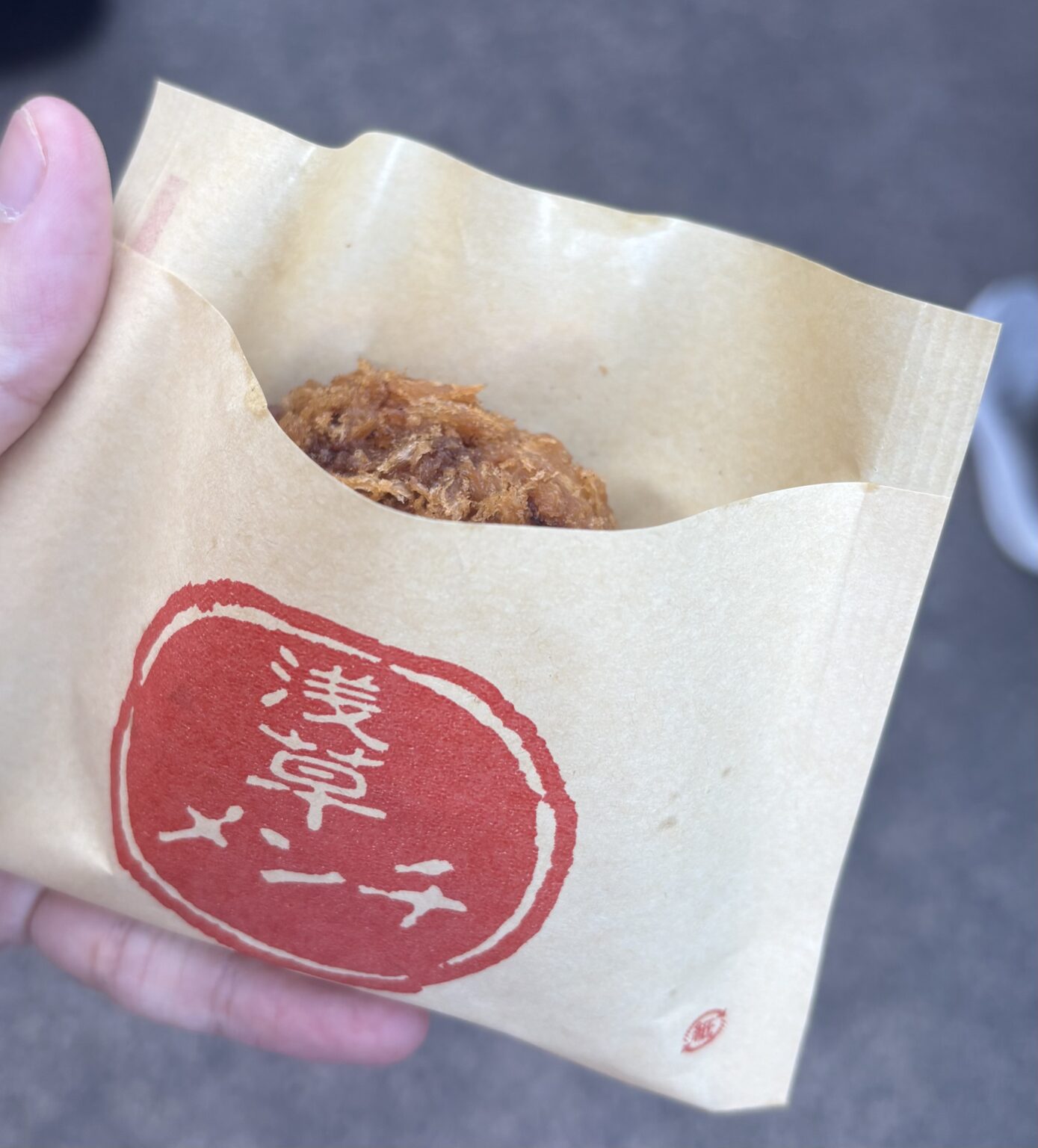
This is also a dish I definitely want you to eat when you come to Asakusa.
It is a Menchi-katsu (minced meat cutlet), but it is extremely juicy, and the meat juices overflow when you take a bite. Usually, there is a line of people waiting to buy it, but if you go on a weekday, you can often buy it without lining up, which is a great deal! Like Daikokuya, the store faces the passage between Nakamise Street and Sensoji Temple.
Matcha Soft Cream
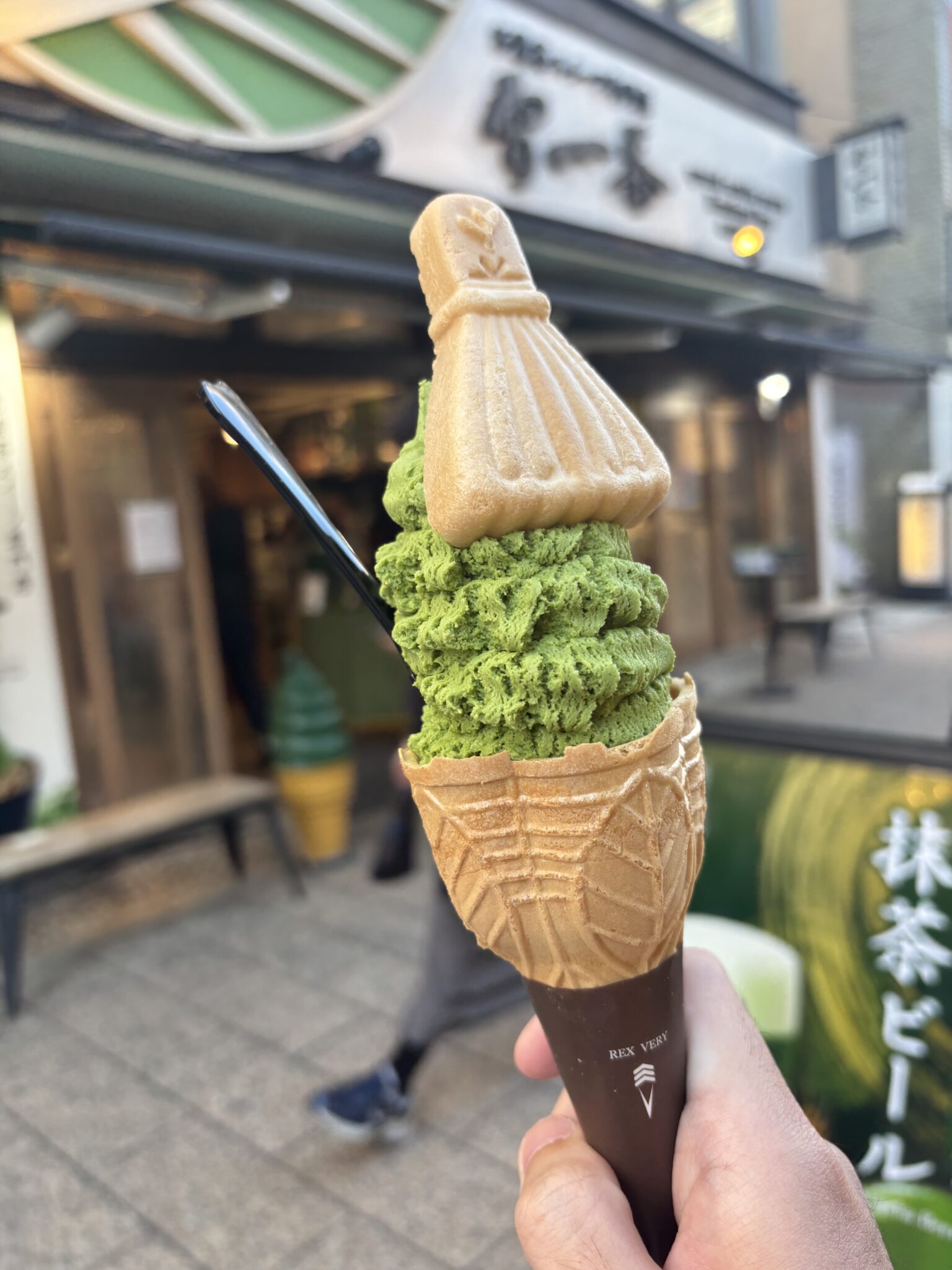
Asakusa is also famous for Matcha!
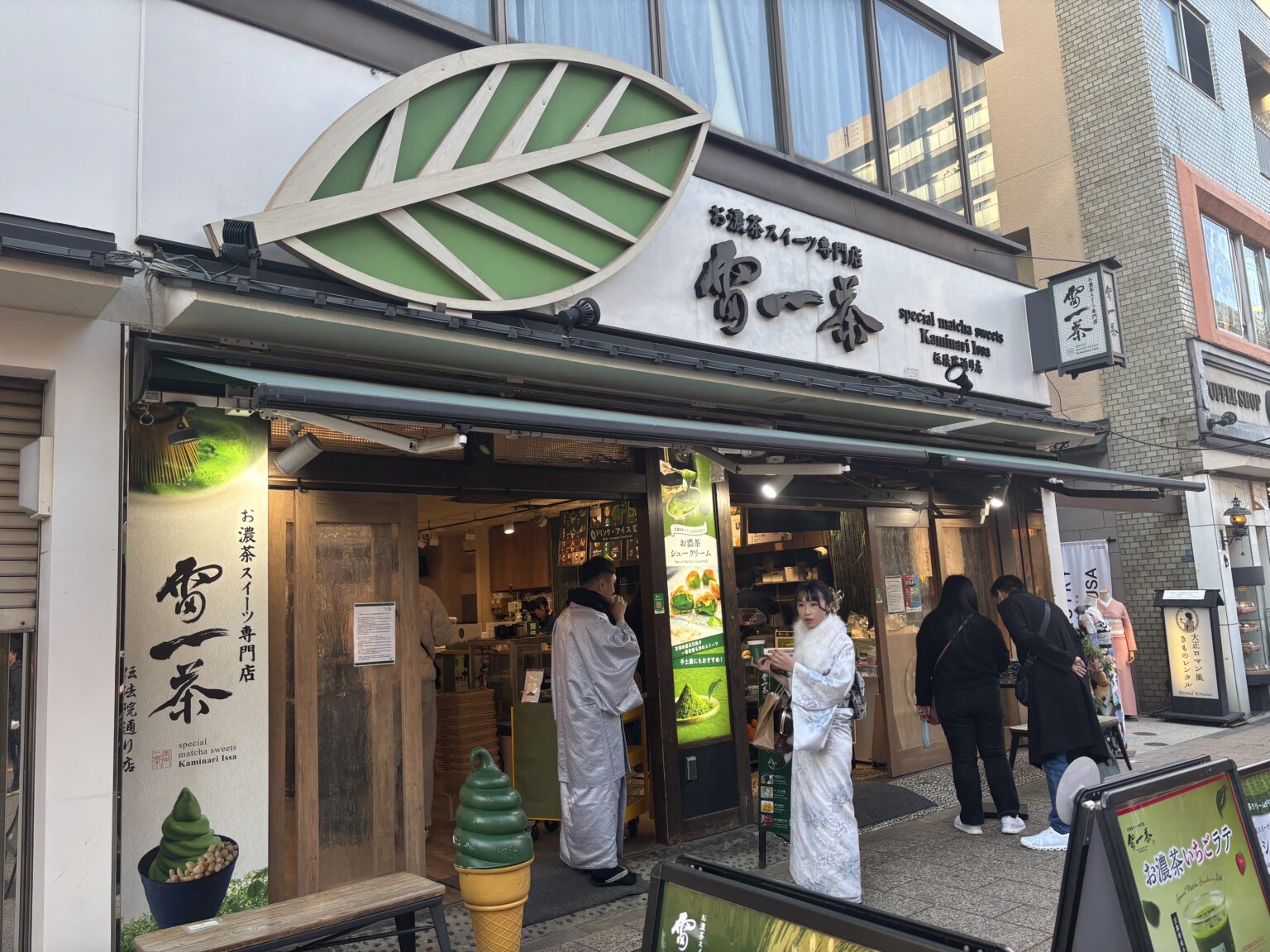
At Kaminari Issa, you can choose the intensity of the matcha in your matcha sweets.
I chose the Matcha Soft Cream, but for tea lovers, the “dark tea” (Koicha) might be good. Please introduce it to your overseas friends when they come to Asakusa!

Ningyo-yaki
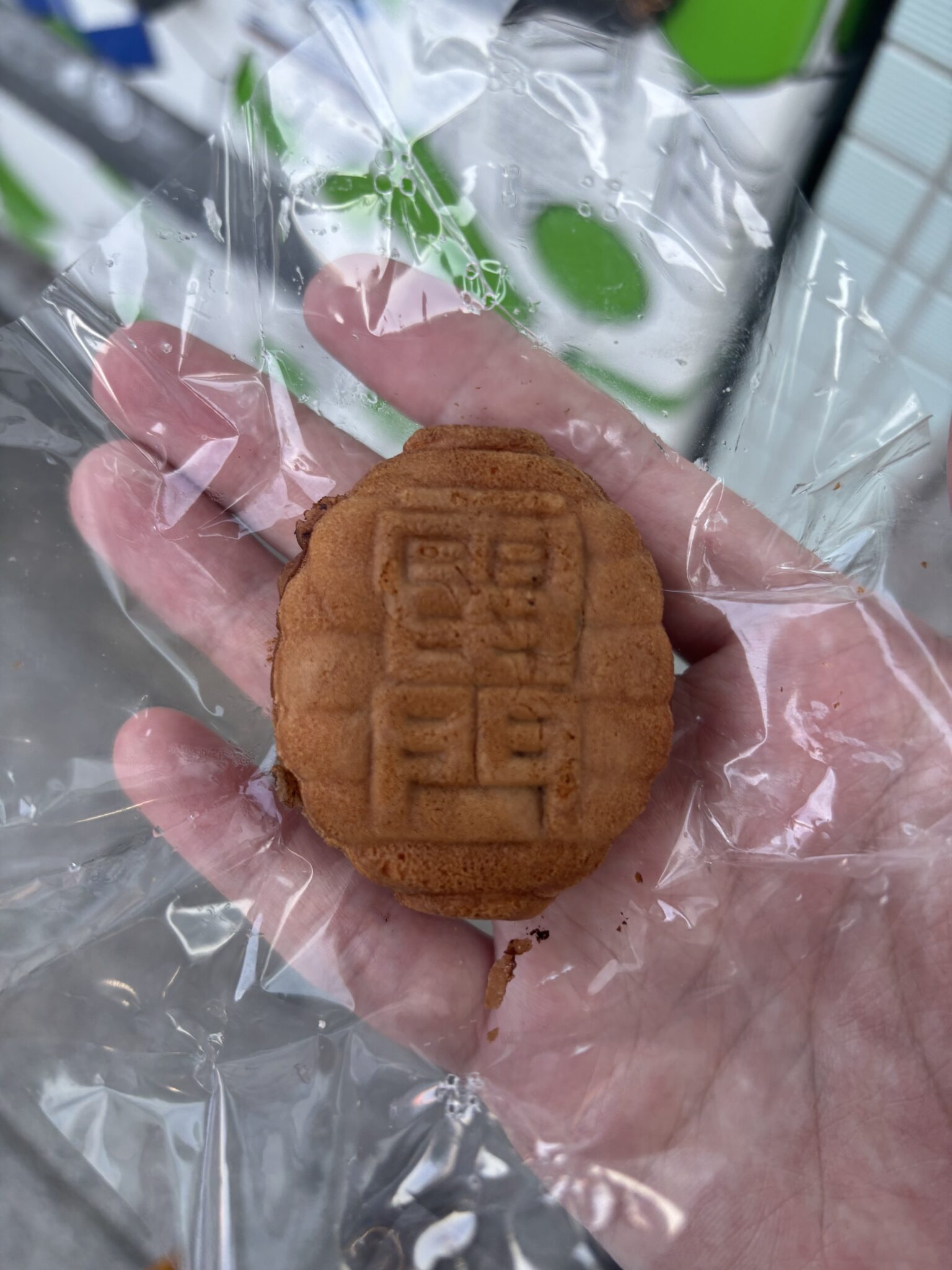
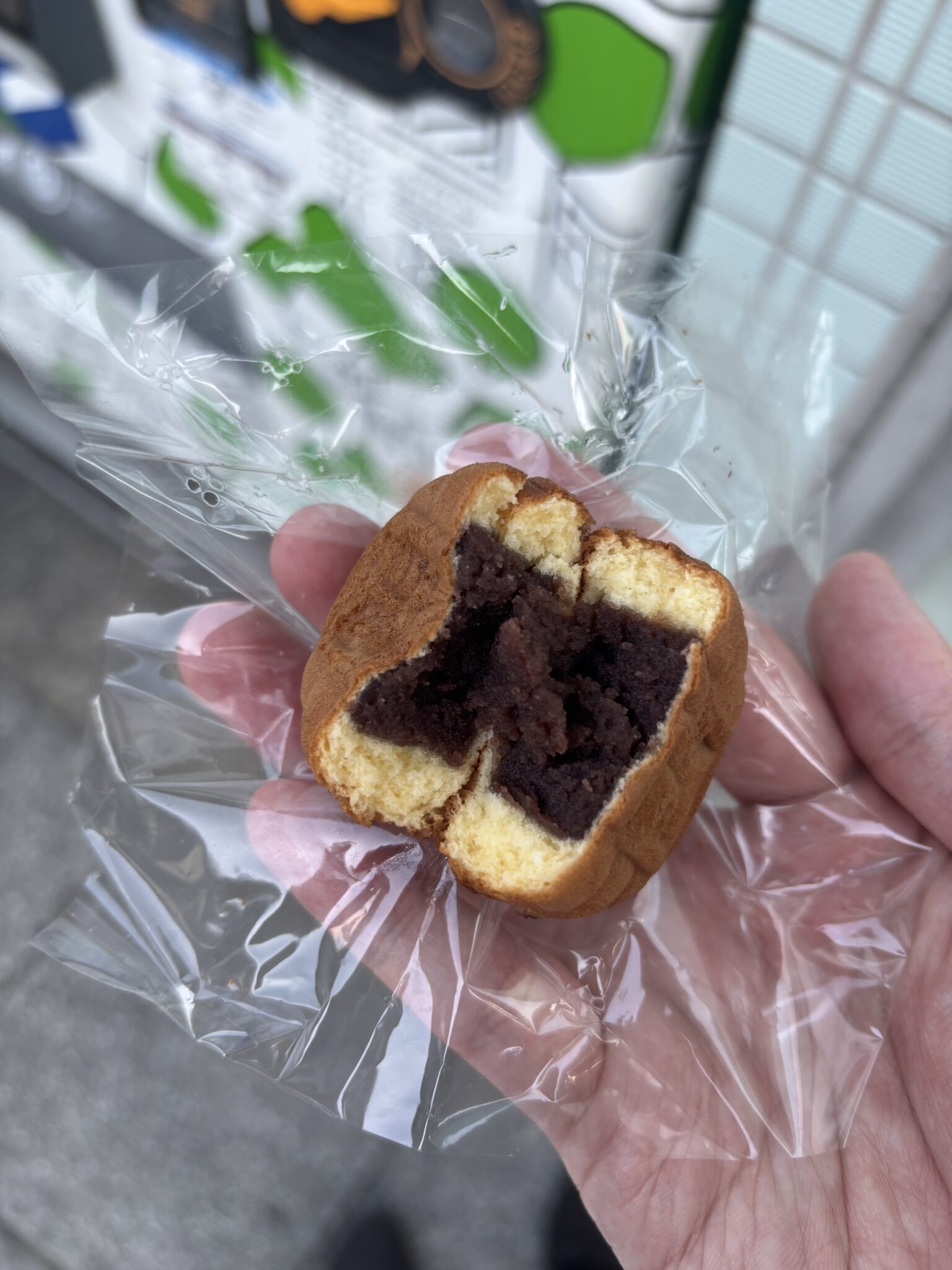
Ningyo-yaki is a sweet sponge cake filled with sweet Anko (red bean paste)!
For me, the snack of Asakusa is Ningyo-yaki. You can buy it on Nakamise Street, but since eating and drinking are not allowed within Nakamise Street, let’s step off the street to eat it.
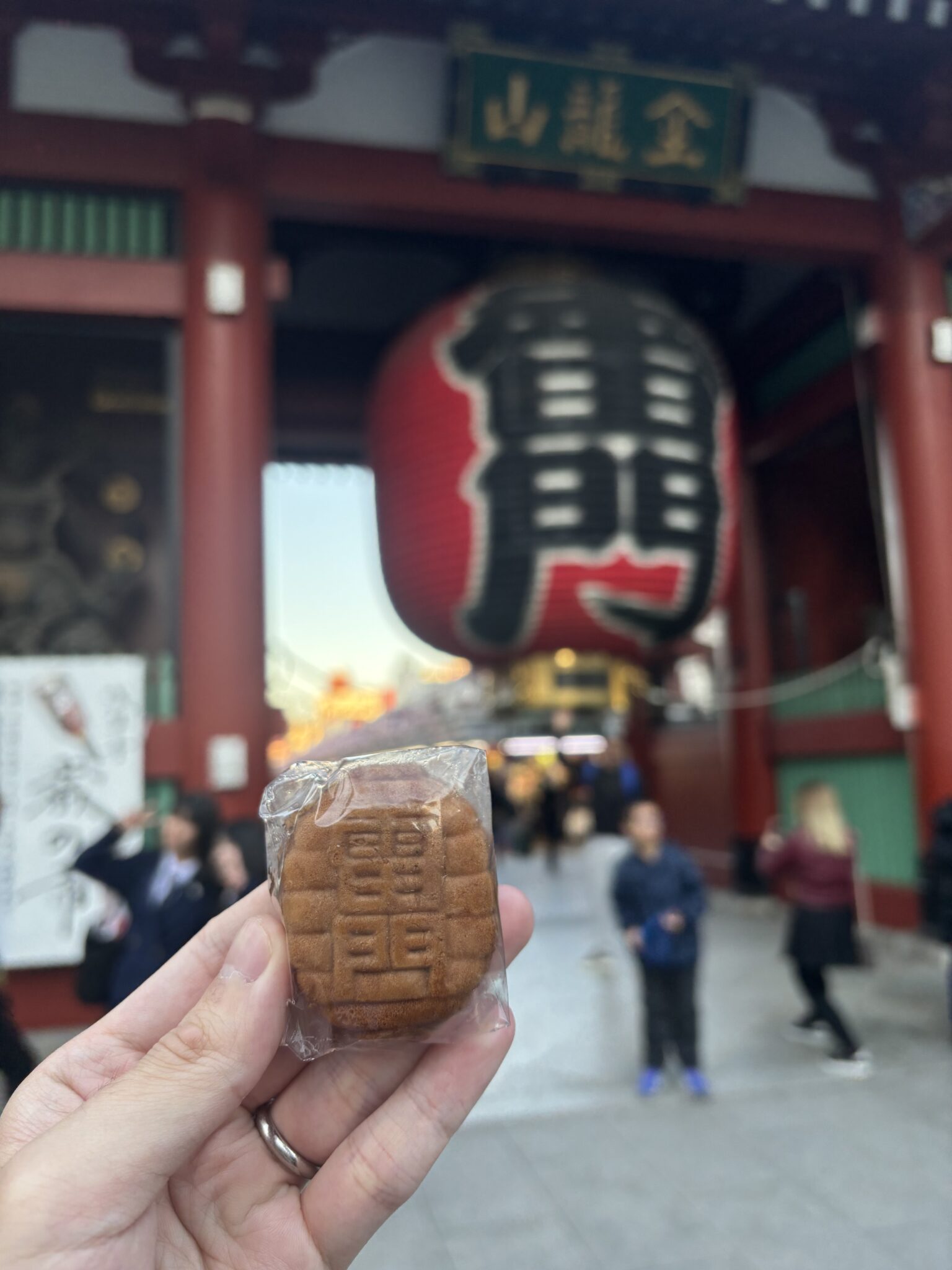
There are various shapes of Ningyo-yaki, but the one I bought this time was in the shape of Kaminarimon, so I took a picture with Kaminarimon.
💡 Traveler’s Tip: Payment Methods
While many places now accept cards, some traditional shops and food stalls on Nakamise still prefer Cash. Keep some Yen bills and coins handy for street food!
Hidden Spots
Asakusa Underground Shopping Street
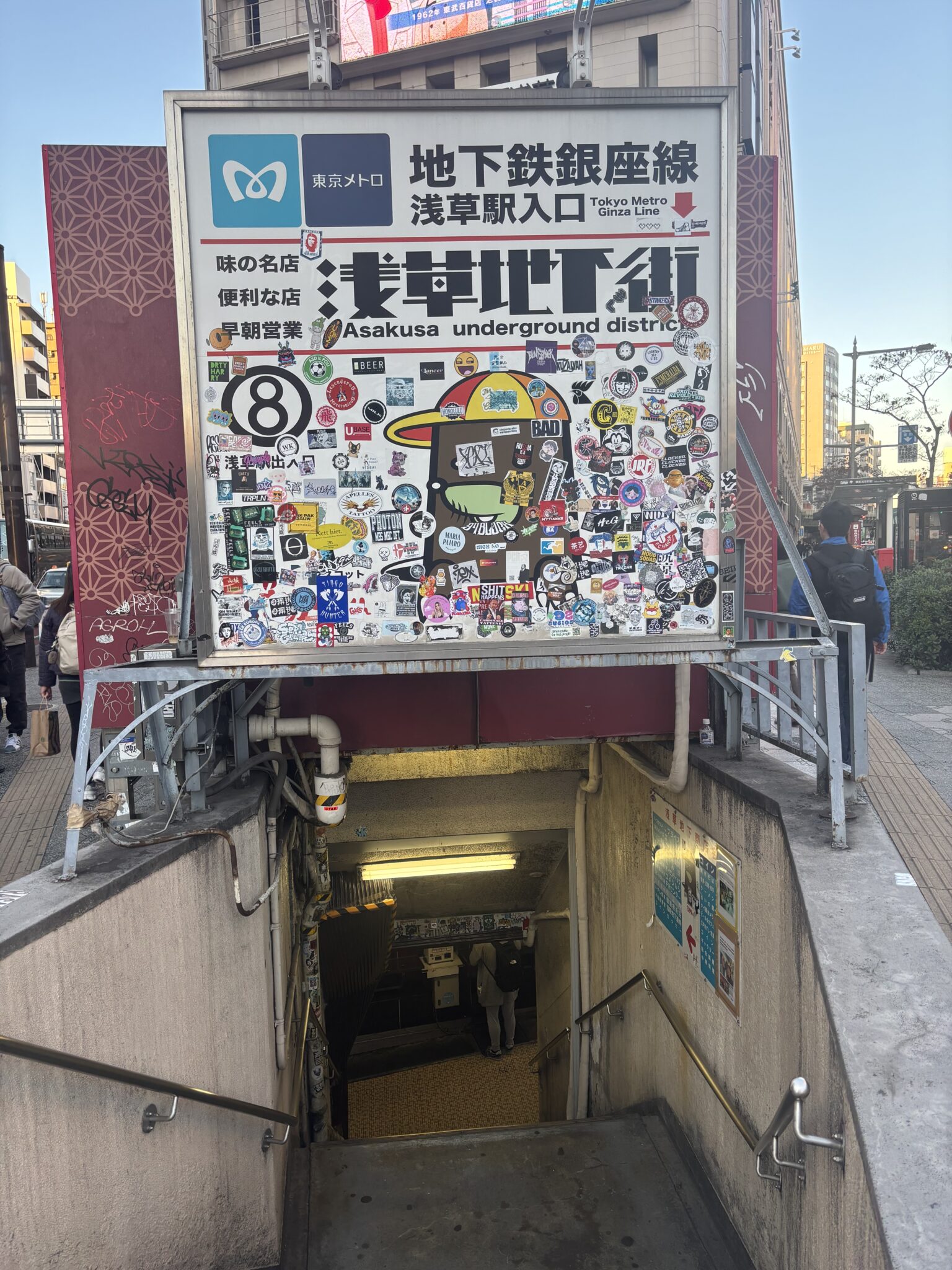
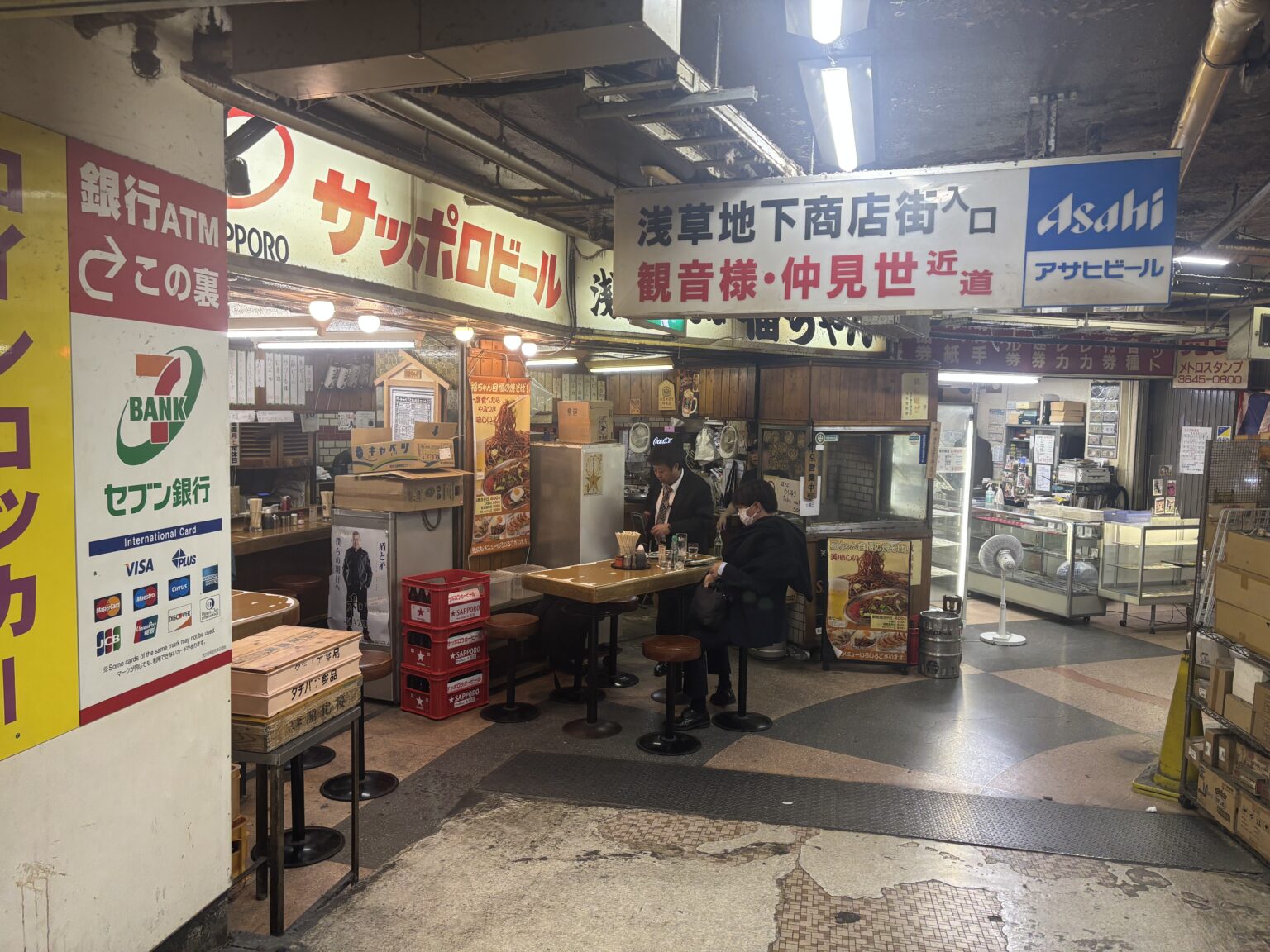
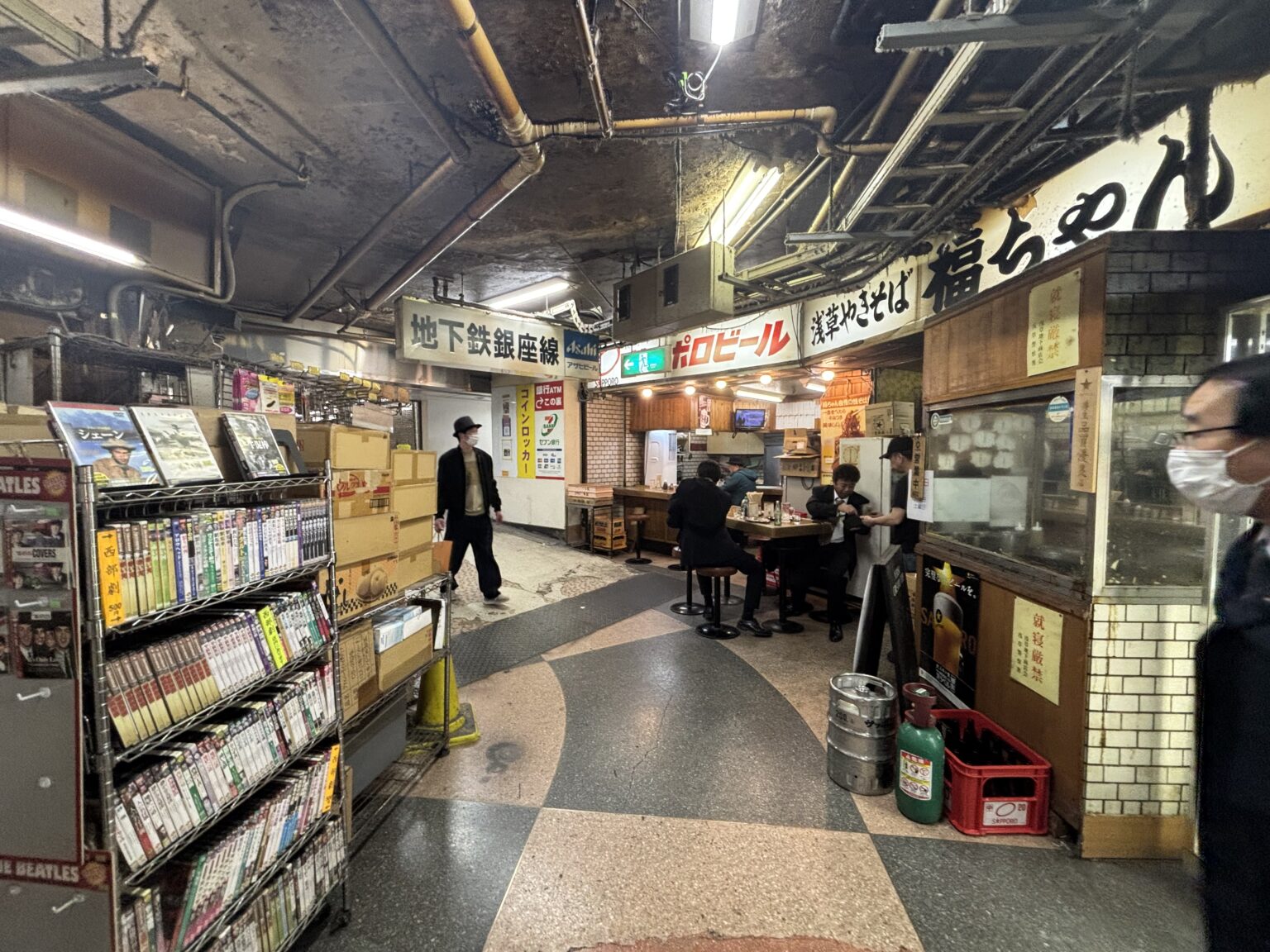
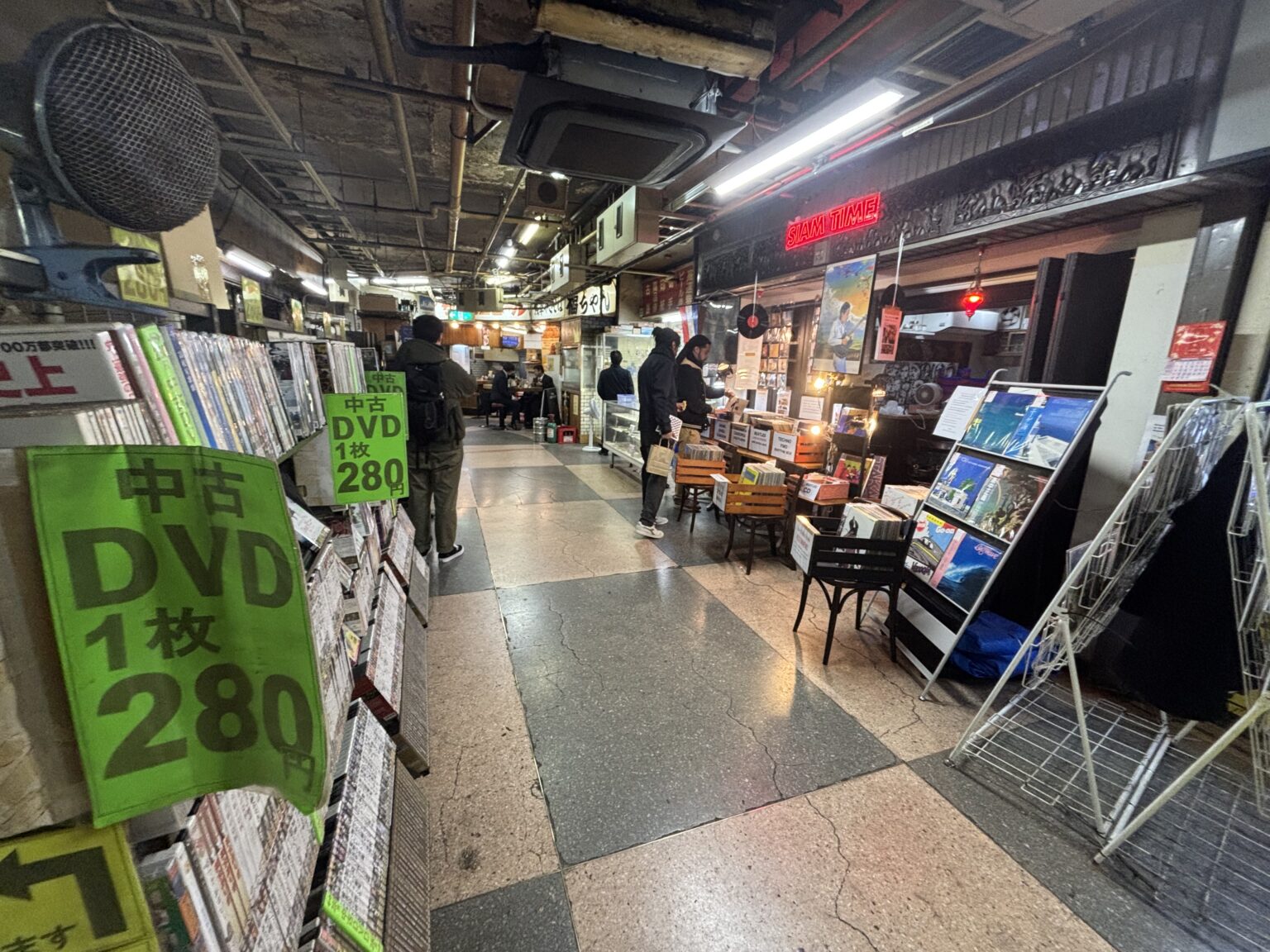
This is the “Asakusa Underground Shopping Street” accessible from the basement of Asakusa Station. When you dive into the underground of Asakusa, a scene spreads out where time seems to have stopped, making you wonder what era you are in.
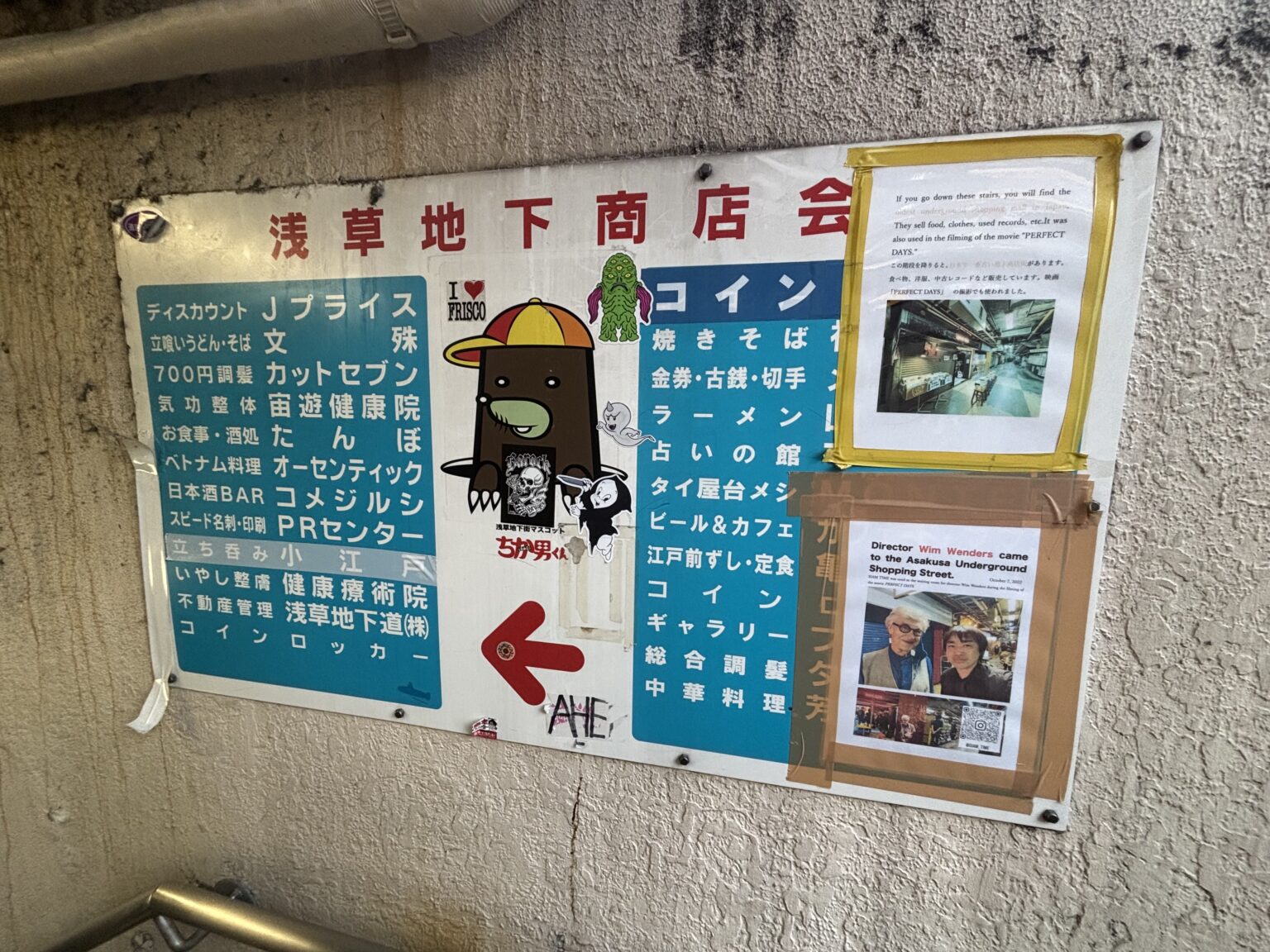
This area itself is small, but souvenirs and alcohol are sold, and there are even Yakitori restaurants and bars.
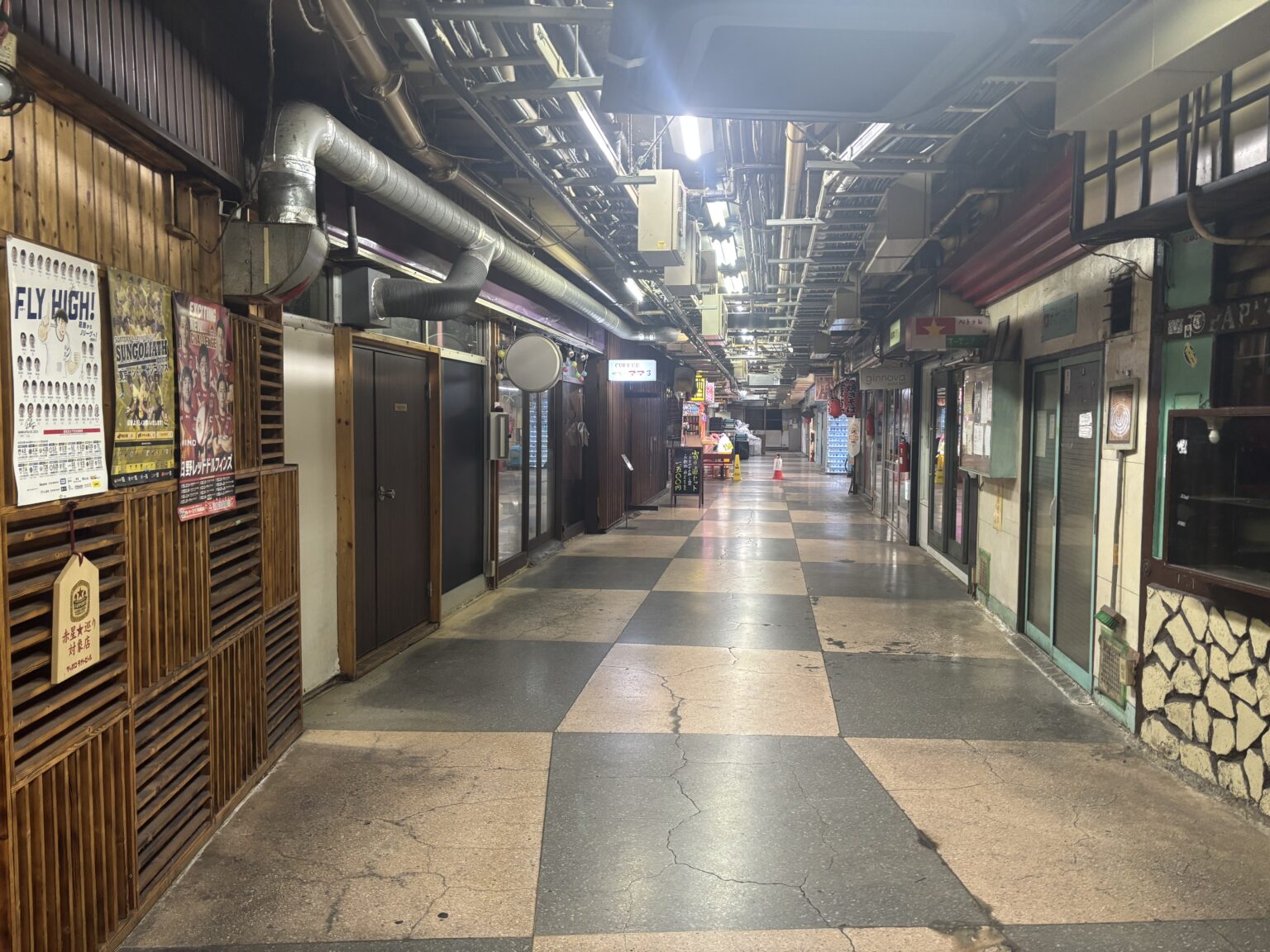
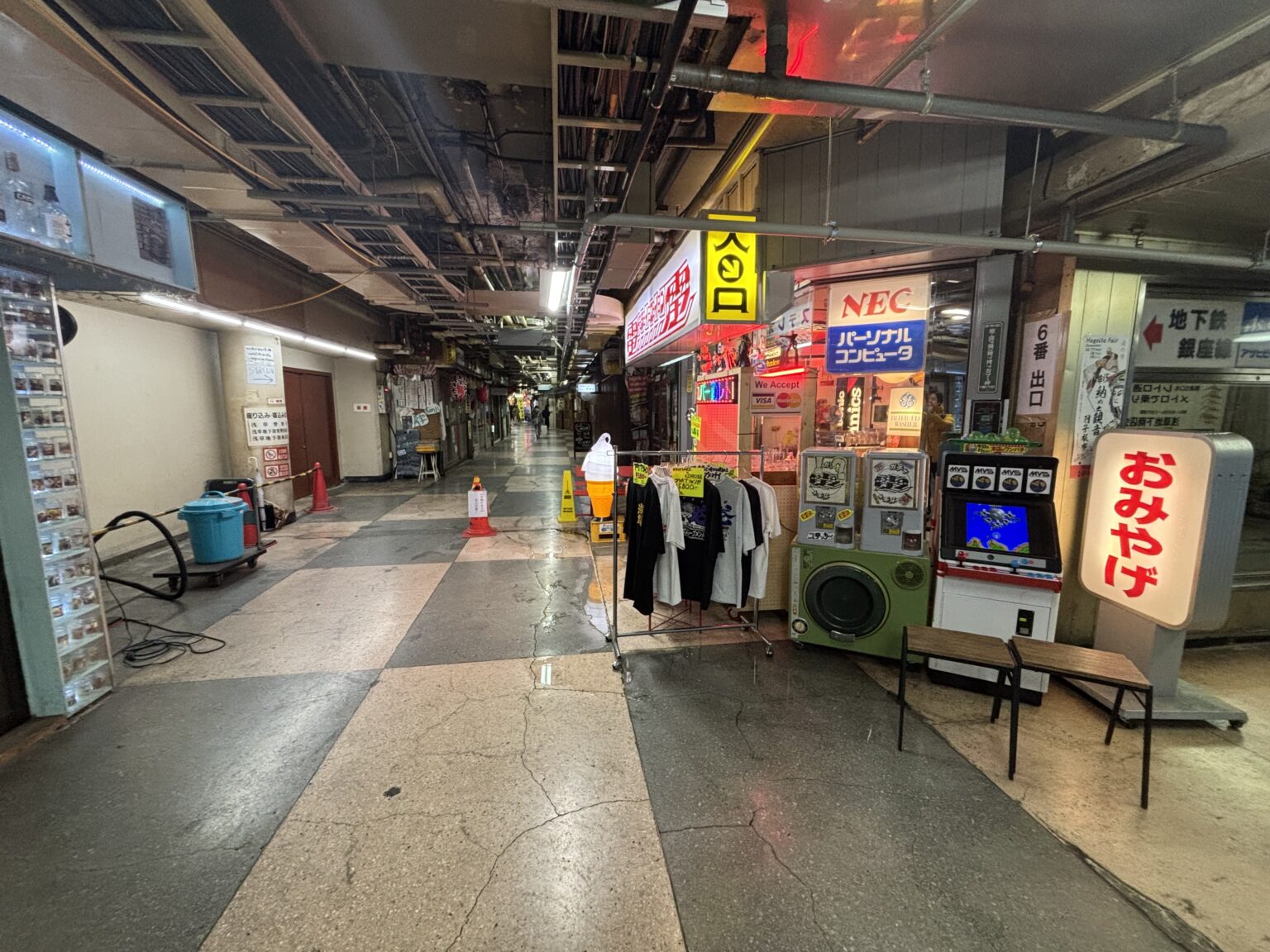
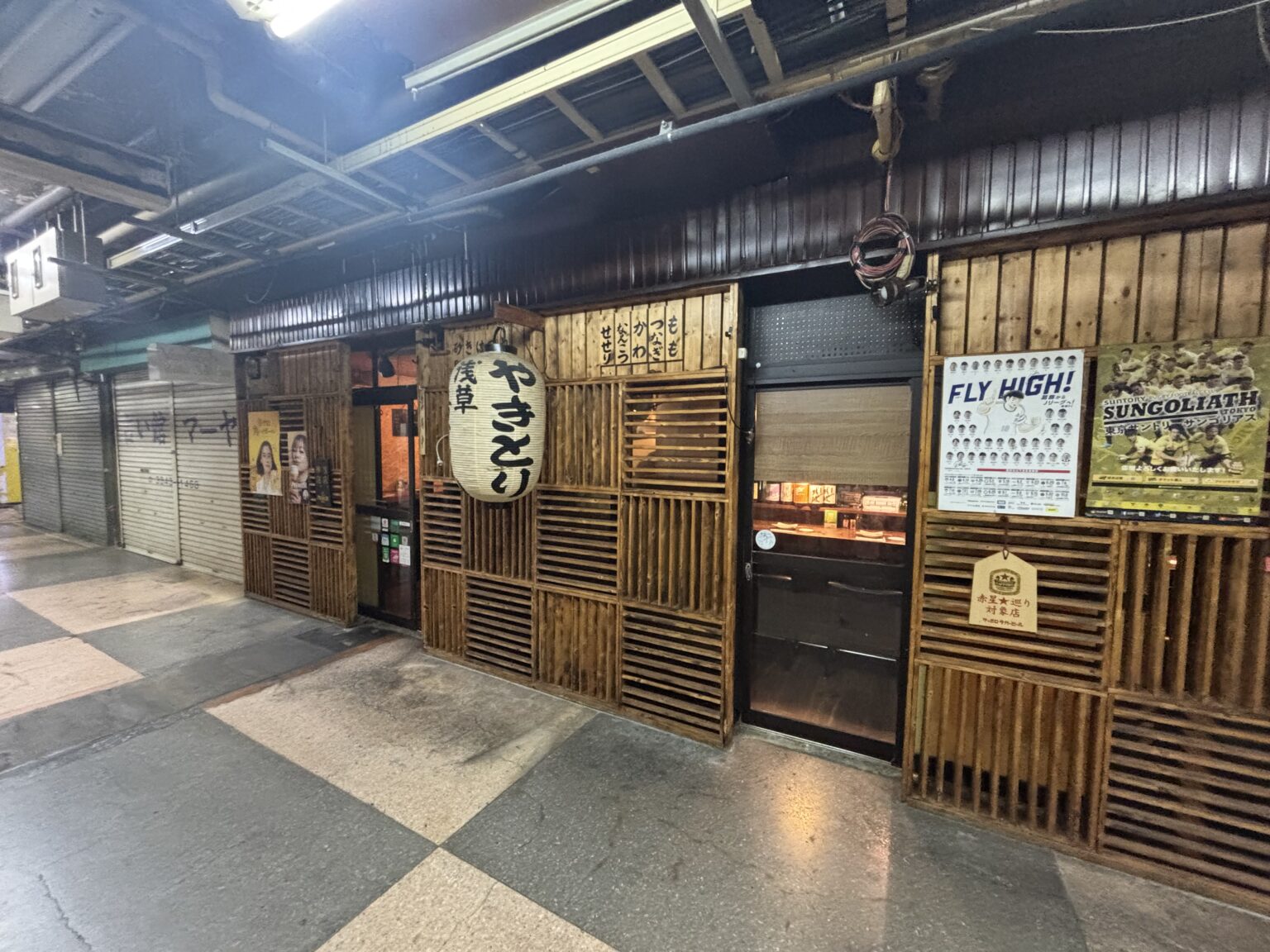
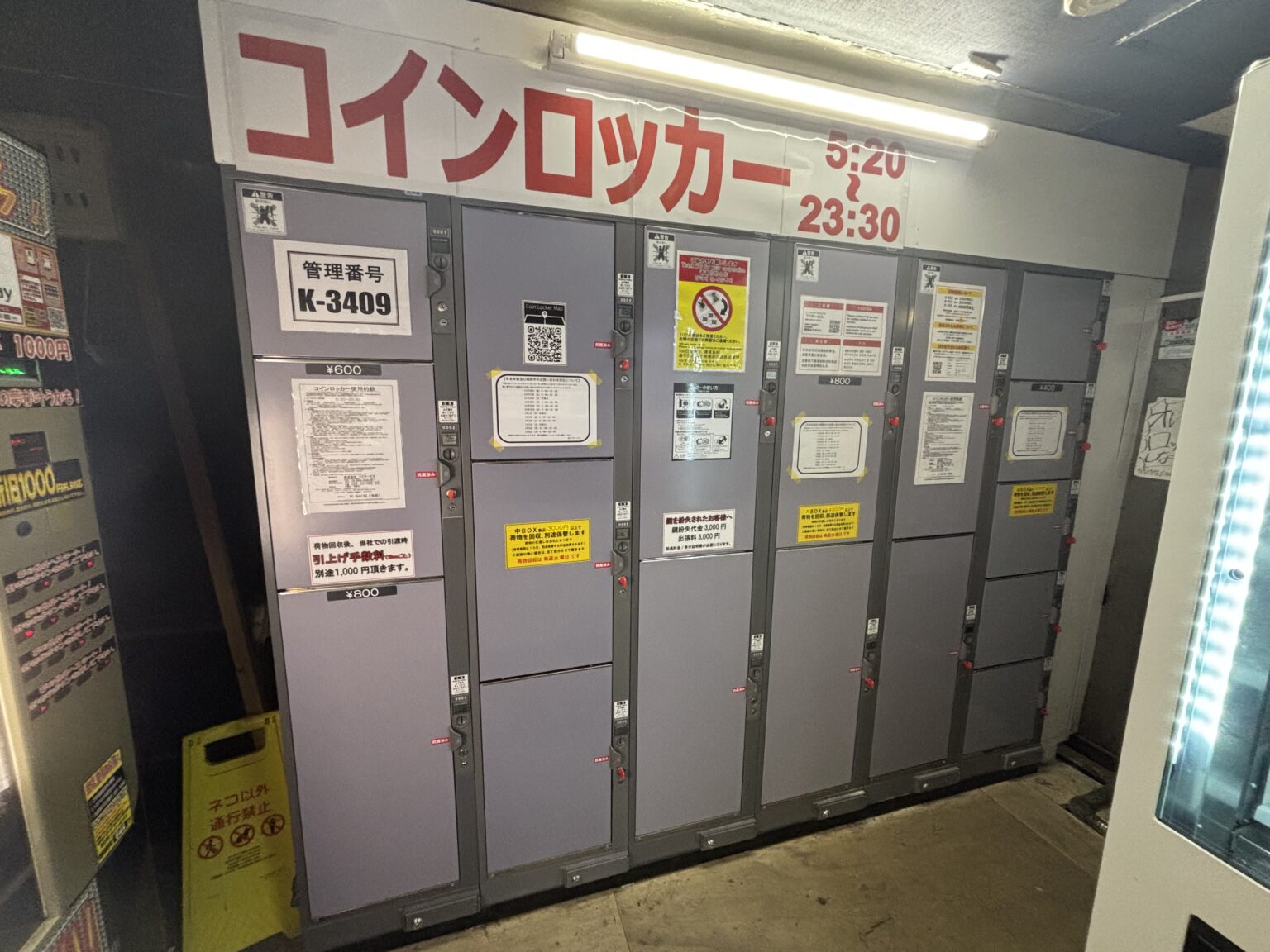
People with a lot of luggage can leave their luggage in the coin lockers and explore Asakusa. These are new lockers, so security is solid and safe.
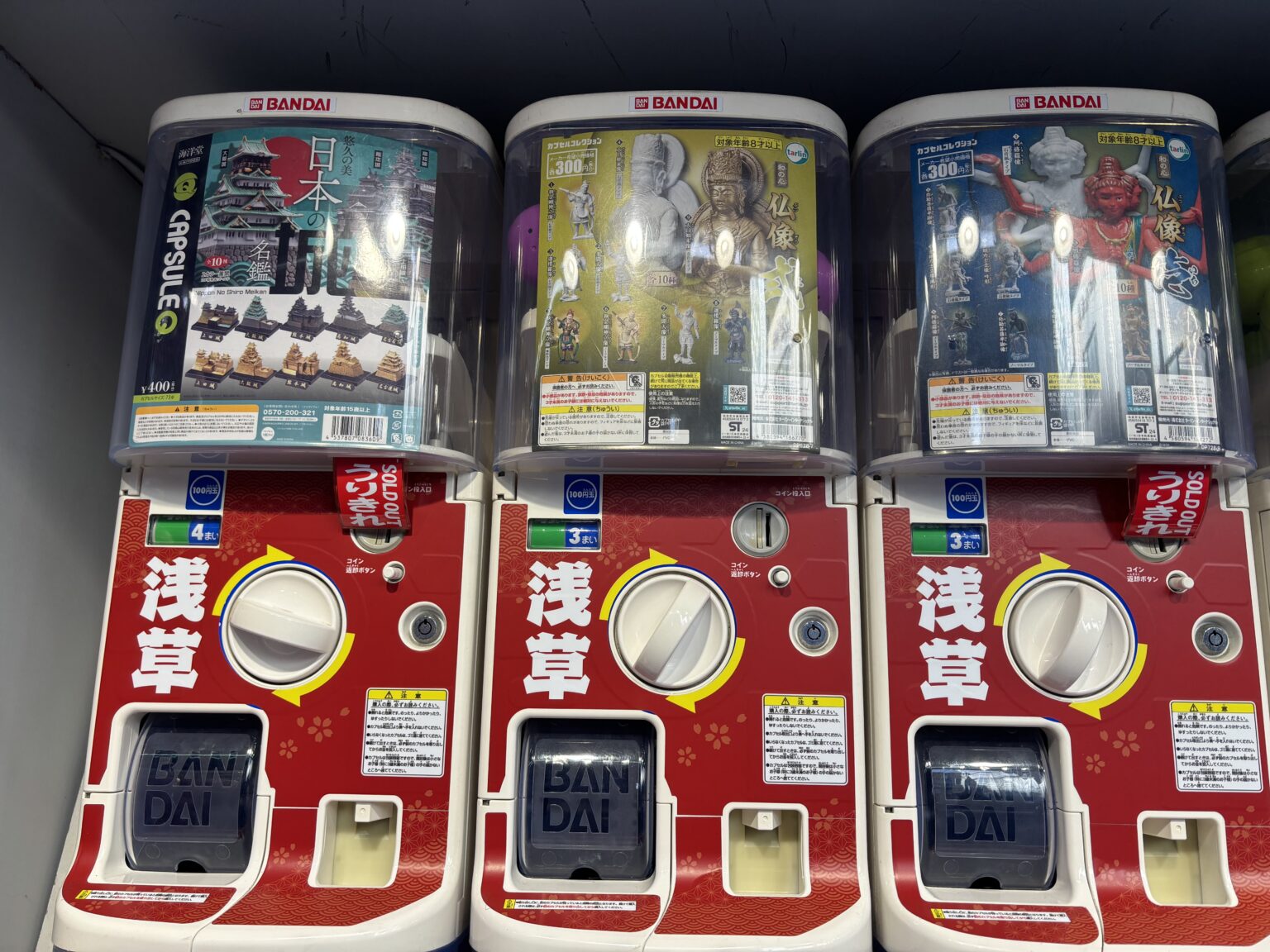
Gachapon
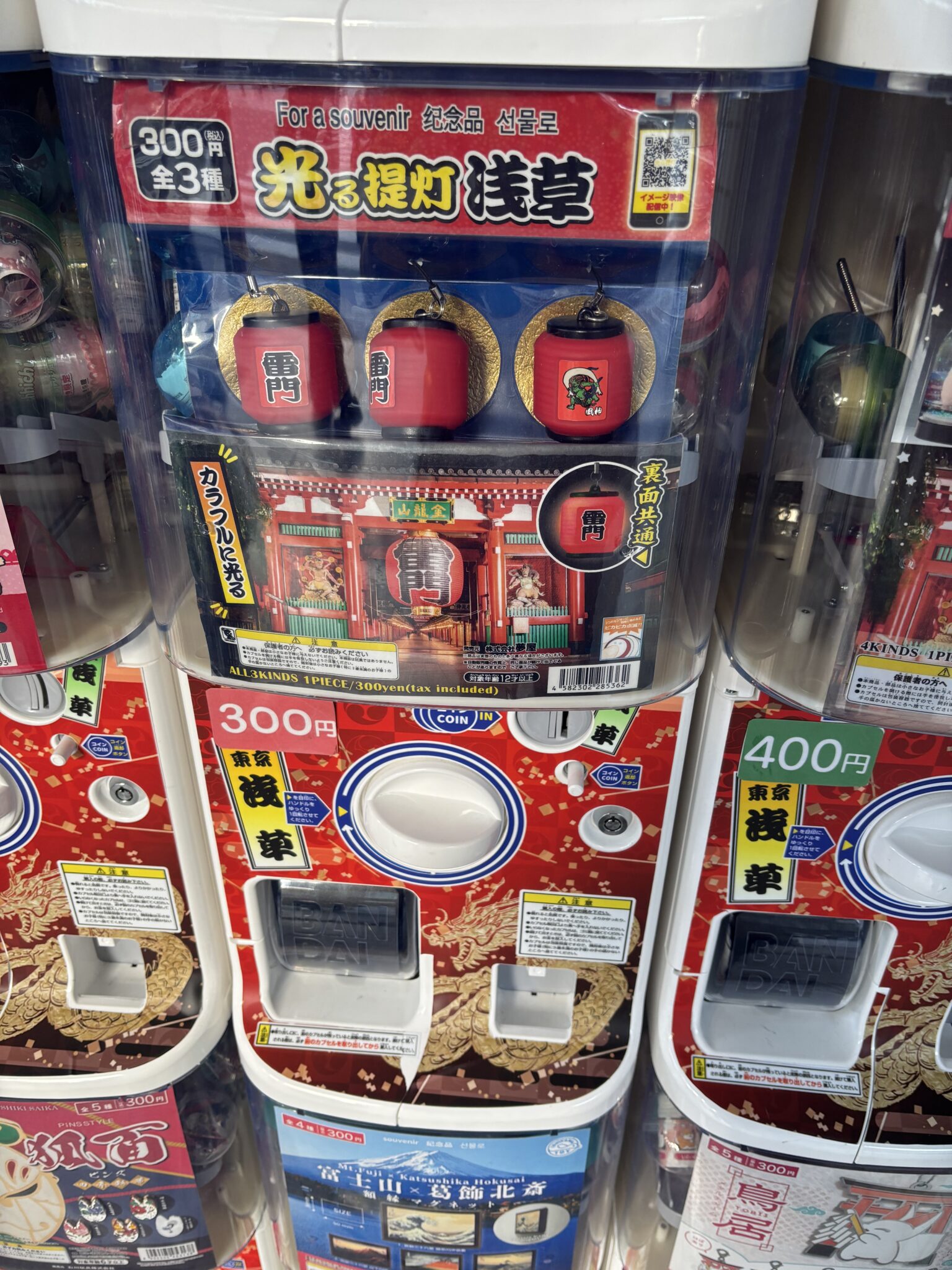
There are various Gachapon (capsule toys) in Japan, and Asakusa also has local Gachapon everywhere.
There are Gachapon unique to tourist spots such as lanterns, the Great Buddha, and castles, so please take a peek.
Generally, you can spin it once for about 300 yen or 400 yen.
💡 Traveler’s Tip: Using Gachapon & Lockers
- Gachapon: You will need 100-yen coins. If you don’t have enough, look for a money change machine or convenience store nearby.
- Coin Lockers: Most lockers accept IC cards (like Suica/Pasmo) or 100-yen coins. Memorize your locker location or take a photo of it, as station layouts can be confusing!
🥗Nearby Vegetarian Restaurants
⚠️Note: The author is not a vegetarian. While accuracy is prioritized, we cannot take responsibility for the content of the information provided. Please be sure to re-verify the information yourself using the article as a reference.
Ca fete
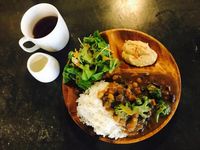
Location: Integrated right within our cozy Guesthouse!
• Language Barrier? No Problem! Our staff speaks English, and we offer a comprehensive English menu.
• Specialized Menus Available: We cater to every need! We offer specialized menus for Vegan, Vegetarian, and even Muslim-friendly (Halal-conscious) diets.
• More Than Just Greens: Go beyond salad! Our menu features satisfying and flavorful options like Vegan Curry and delicious Vegan Pasta, alongside fresh, wholesome salads.
Marugoto Vegan Dining Asakusa
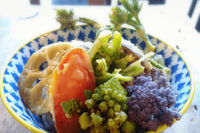
• Location: Right in the heart of Asakusa, near the famous temples!
• Staff You Can Trust: Our entire team is 100% Vegan! Get genuine advice and service from experts who truly understand your diet.
• Seamless Experience: We offer English-speaking staff and a full English menu for easy ordering.
• Certified Compatibility: Dedicated menus for Vegan and Vegetarian diets, plus Muslim-friendly (Halal-conscious) options are available.
• Quality Promise: We prioritize your health with the use of Organic Ingredients.
• Flavor Highlights: Enjoy classic options like fresh Salads and Curries, plus a must-try plant-based take on the local specialty: Asakusa Tempura!
🗣️ A Little Chit-Chat
Asakusa: What the Japanese See
Here, I’d like to talk a little bit about Asakusa from my perspective as someone born and raised right here in Tokyo.
For most Japanese people, Asakusa is less about daily life and more about a special spot where you can deeply feel Japan’s tradition and history. If you attended school outside of Tokyo, you might have a strong image of it being a school trip (shūgaku ryokō) destination.
❓What is Shūgaku Ryokō (School Trip)?
These are educational and cultural trips that students take, usually in junior high or high school. The goal is to learn about Japan’s history, culture, and nature, often traveling to major cities like Tokyo or Kyoto. It’s a rite of passage for young Japanese people, making the memories of places like Asakusa very nostalgic.
In the summer, the Sumida River Fireworks Festival is held here, which is one of the most popular and largest events in all of Tokyo. Friends, families, and couples visit the Sumida River to watch the fireworks and enjoy the summer—it’s a huge seasonal tradition.
The Asakusa area is also known as Shitamachi (下町, literally “downtown,” but meaning the old-town district). It’s not a modern commercial hub like Shibuya; it’s an area defined by its history and tradition. Because of this, many of the food establishments are “long-established businesses” (shinise) that have maintained their traditional flavors for hundreds of years, passed down through generations.
The food I introduced earlier was geared toward tourists, but if I were recommending food to a Japanese person, I would definitely suggest Tsukudani. It’s a type of simmered seafood or seaweed that pairs perfectly with rice, and it is a classic example of Shitamachi culture.
Even the tempura here is different. It’s not the flavor you find at chain restaurants like “Tenya,” which the average Japanese person eats regularly. Asakusa is where you can enjoy that more traditional, historical taste.

After enjoying a traditional Japanese meal in Asakusa, I think it’s really interesting to try the flavor that modern Japanese people eat daily at a chain restaurant, just to compare and explore the difference!
☕️Thank you for your continued support!
Thank you for reading to the end!
I started this blog because whenever I travel abroad, I always hope to experience a country like a local.
Through this site, I simply want to share Japan the way locals actually live and enjoy it.
If this guide helped you, you’re welcome to support the project in any way you like:
• Send a small tip ($5 ☕)
• Try a digital Omikuji ($1 ⛩️) and test your luck
• Or simply book through the links on this page — at no extra cost to you
No pressure at all — your support just helps keep this project alive.
Now, go enjoy Japan to the fullest. Thank you!

コメント